
Maximowicz poplars × Berlin poplar
hybrids between Populus maximowiczii A. Henry and Populus x berolinensis Dippel
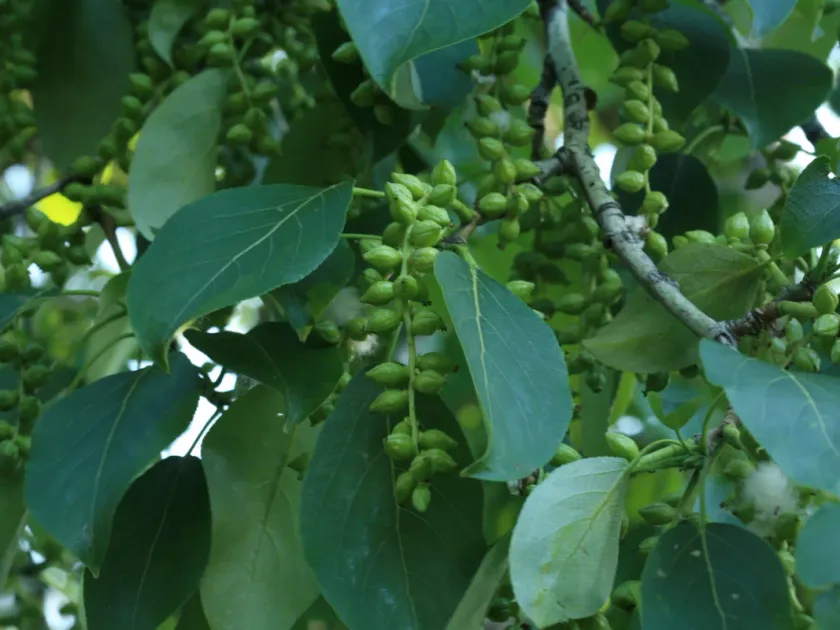
Description
Growing requirements
The hybrid known as Maximowicz × Berlin poplar (Populus maximowiczii × Populus × berolinensis) is a notable representative of the Salicaceae family. It is valued in professional forestry for its rapid growth rate, which is achieved through the vigor typical of interspecific hybrids of the Populus genus.
Regarding soil requirements, this hybrid thrives in deep, moist, and nutrient-rich soils. While it exhibits a certain degree of soil adaptability, it performs best on well-drained loamy sites that provide a consistent water supply without becoming permanently waterlogged.
Climatic requirements are defined by the need for full sunlight and a moderate continental climate. The hybrid is frost-hardy, making it suitable for temperate regions, provided that the site is sheltered from severe desiccation during the winter months.
Agrotechnical practices involve careful site preparation and weed management during the establishment phase. Maintaining clear competition-free zones around the trees is essential to ensure that young saplings gain sufficient vertical growth during their first years.
The primary utility of this culture includes erosion control, windbreak formation, and biomass production. Due to its straight stem development and rapid growth, it is a preferred choice for short-rotation forestry and urban greening projects in appropriate environments.
Main diseases and pests
The major threats to the health of these trees are fungal pathogens, specifically those causing leaf rust and stem cankers. These diseases can proliferate rapidly if environmental conditions lead to high humidity and poor air circulation within the tree plantation.
Pest pressures primarily come from defoliating insects, such as beetles and moth larvae, which can significantly reduce the photosynthetic capacity of the canopy. Infestations are particularly problematic during dry, hot summers that stress the trees.
Integrated pest management strategies are recommended to maintain plantation health. This includes selecting certified, disease-resistant plant material and conducting regular field inspections to detect early signs of insect activity or fungal spores.
Chemical control, including the application of fungicides and insecticides, should be used judiciously as a secondary measure. Priority is always given to cultural practices, such as proper spacing, to ensure that the trees grow vigorously enough to resist common pathogens.
Preventative measures are essential to keep the plantation productive. Removing and destroying heavily infected biomass is a standard practice to reduce the inoculum levels and protect healthy neighboring trees within the stand.