
Sandbox tree
Hura crepitans L.
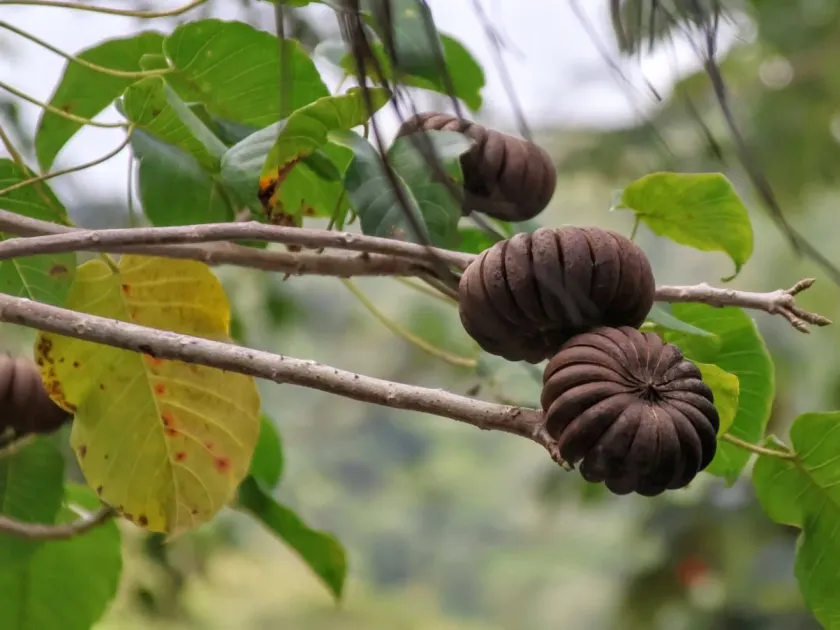
Description
Sowing dates
Propagation of the sandbox tree (Hura crepitans) primarily relies on seeds, which possess a short lifespan and must be sown soon after the fruit pods explode and release them.
In nursery settings, seeds should be planted in well-draining soil mixes, burying them approximately 2–3 centimeters deep to ensure stable germination conditions.
Optimal germination requires consistent soil temperatures between 25 and 28 degrees Celsius, typically resulting in emergence within three to four weeks.
Seedlings require partial shade during their early growth stages to prevent desiccation from intense tropical sunlight before they establish a robust root system.
Since the tree belongs to the Euphorbiaceae family, growers must exercise extreme caution as all parts of the plant, including seeds, contain toxic sap.
Growing requirements
The sandbox tree is exclusively a tropical species that requires frost-free environments and high ambient humidity throughout the entire growing cycle.
Deep, fertile, and well-draining alluvial soils are ideal for the development of these large trees, which can reach impressive heights in optimal conditions.
Adequate water availability is essential, as the species is sensitive to prolonged drought periods and thrives in areas with consistent rainfall or groundwater.
The trees are highly light-demanding and require full sun exposure once they reach the sapling stage to maximize their growth rate and overall biomass production.
In forestry applications, trees should be spaced significantly apart, often 5–10 meters, to accommodate the wide canopy and extensive root system of mature specimens.
Yield
The primary agricultural output of Hura crepitans is its light-colored, moderately soft timber, which is highly valued for furniture construction and interior cabinetry.
The wood is known for being easy to work with and finish, making it a preferred raw material in tropical regions where it serves as a sustainable alternative to harder woods.
Seed harvesting is notoriously difficult due to the explosive nature of the fruit, which splits violently at maturity and scatters seeds across a wide radius.
Commercial plantations are managed by focusing on rapid stem diameter growth, which allows for scheduled harvesting cycles once the trees reach maturity.
Beyond timber, specific parts of the tree have historically been researched for potential phytochemical applications, though such uses are secondary to timber production.
Main diseases and pests
The main threats to sandbox tree plantations include wood-boring insects that can damage the internal structure of the trunk and reduce the quality of the timber.
Fungal diseases affecting the root system can be catastrophic if the plantation soil becomes waterlogged or lacks proper drainage during the rainy season.
Young plantations are highly susceptible to weed encroachment, which can outcompete saplings for nutrients and light, necessitating consistent manual weeding.
While the toxic sap provides some natural defense, certain specialized pests have evolved to tolerate it, requiring integrated pest management strategies.
Routine health monitoring is vital, as early detection of localized fungal or insect infestations can prevent the spread of pathogens throughout the entire plantation.