
Hugueninia tanacetifolia
Hugueninia tanacetifolia
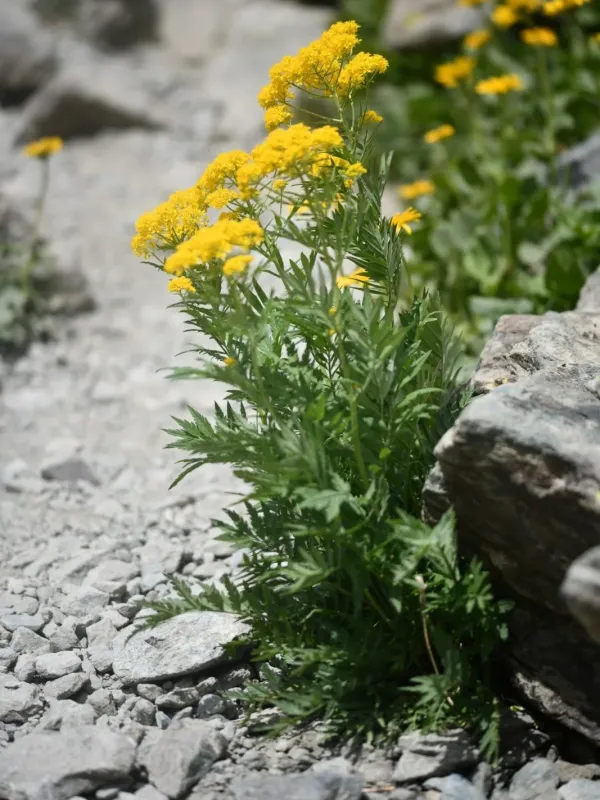
Description
Growing requirements
Hugueninia tanacetifolia is a perennial herbaceous species belonging to the Brassicaceae family. It is natively distributed across the high-altitude regions of the Alps, where it typically colonizes limestone screes and rocky mountain slopes.
Botanically, this species is characterized by its dissected leaves which resemble those of tansy, giving it its specific name. It possesses a woody base and a hardy root system designed to anchor the plant securely against harsh alpine environmental pressures.
To cultivate this species, one must strictly replicate its native rocky environment. The primary requirement is a sharply draining, mineral-rich soil with a neutral to alkaline pH balance. It absolutely refuses to grow in heavy, water-logged soils that lack sufficient aeration.
The plant demonstrates significant tolerance for cold climates, thriving in temperatures that would be detrimental to less specialized crops. It requires ample light and a location with good air circulation to prevent the onset of fungal diseases that often plague mountain plants moved to lower elevations.
Currently, the economic utility of Hugueninia tanacetifolia remains focused on niche botanical collections and potential phytochemical research. Its essential oil profile is of interest to researchers investigating the adaptive chemical defenses of alpine Crucifers against environmental stressors.