
Hubertia tomentosa
Hubertia tomentosa
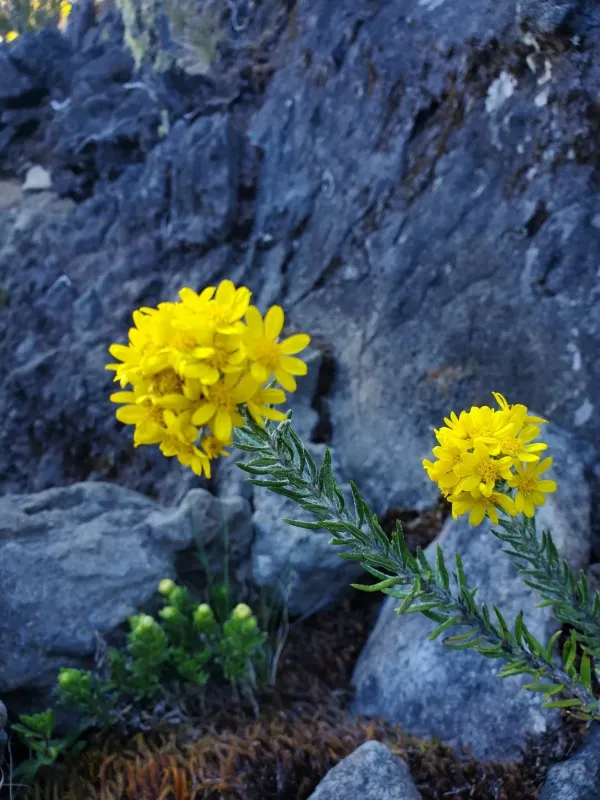
Description
Growing requirements
Hubertia tomentosa is a perennial plant belonging to the Asteraceae family, native to the high-altitude regions of Réunion Island. It is widely recognized for its distinctive felt-like foliage, which serves as an adaptation to its natural mountain habitat.
The cultivation of this species requires a climate that mimics its native environment, characterized by cool temperatures and high atmospheric humidity. It does not thrive in environments with excessive heat or arid conditions, which can stress the plant's metabolic processes.
Soil requirements focus on excellent drainage and aeration. A substrate consisting of high-quality peat, perlite, and coarse sand is recommended to prevent waterlogging, which the plant is highly sensitive to due to its delicate root system.
Regarding light, the plant performs best in bright, indirect light. Direct exposure to intense sunlight can damage the fine hairs on the leaves, leading to leaf burn and reduced aesthetic value. Consistent, moderate light is essential for healthy growth.
Agricultural management includes regular, controlled irrigation using filtered water. Fertilization should be kept at a minimal level, using a balanced fertilizer during the growing season to support development without causing rapid, weak growth.
Main diseases and pests
The most common threats to Hubertia tomentosa include fungal pathogens, particularly root rot, which typically results from improper watering habits or poor drainage. Maintaining a proper balance between soil moisture and air circulation is vital.
Spider mites are a significant pest, especially in indoor environments where air humidity may fluctuate. Their presence is often identified by fine webbing and yellowing of the leaves, which requires immediate intervention with suitable acaricides.
Mealybugs can also infest the plant, hiding in the dense woolly texture of the leaves and stems. Regular inspection of the plant's foliage is recommended as part of routine agronomic monitoring to catch infestations at an early stage.
Gray mold (Botrytis) can develop in stagnant air conditions, particularly during the winter months. This fungus quickly spreads on the foliage if humidity levels are high and ventilation is lacking, causing soft rot of the leaves.
To mitigate these threats, integrated pest management practices should be employed, prioritizing good ventilation, proper spacing between plants, and the use of preventative systemic treatments when environmental conditions favor disease pressure.