
Meadow barley
Hordeum brachyantherum
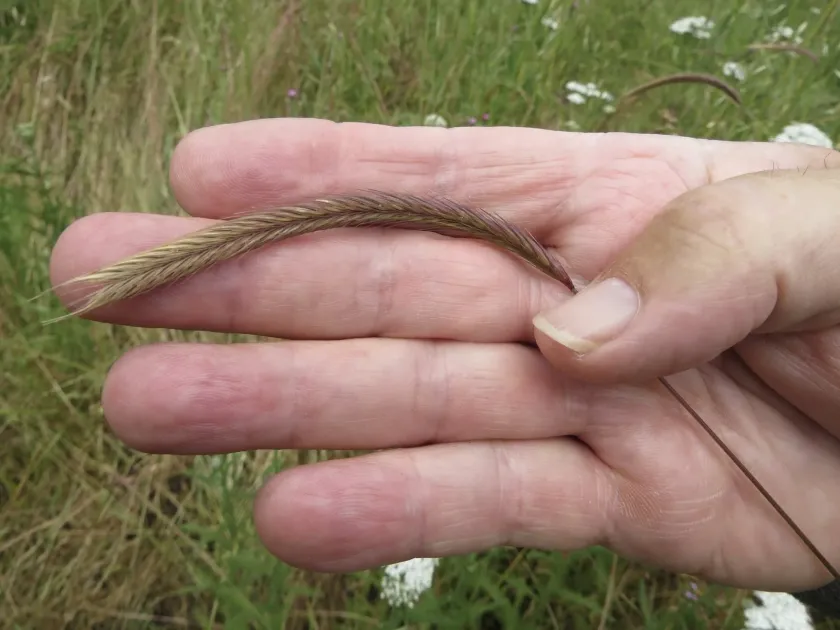
Description
Sowing dates
Meadow barley (Hordeum brachyantherum) is a perennial grass species belonging to the Poaceae family. In agricultural settings, it is typically established by seeding into prepared, weed-free soil during the early spring months.
The seeds are small and require a firm seedbed to ensure proper moisture uptake. Planting depth should be maintained at approximately 1–2 centimeters to avoid emergence failure from being sown too deeply.
Successful establishment depends on ensuring good soil-to-seed contact, often achieved by rolling the field after the sowing process. This practice is crucial in preventing soil crusting and promoting uniform germination.
When used in pasture improvement, meadow barley is frequently integrated into mixtures with legumes to enhance the overall nutritive quality and soil nitrogen fixation properties of the field.
Managing the establishment phase is essential for long-term productivity. Protection from grazing is recommended during the first year of growth to allow the root systems to fully develop and stabilize.
Growing requirements
This grass species is highly adaptable, though it thrives best in open, sunny locations. It exhibits significant tolerance for damp, poorly drained soils, making it an excellent choice for low-lying meadow areas.
Meadow barley prefers neutral to slightly acidic soil conditions. While it can survive on lower-fertility sites, it responds positively to balanced nutrient application, particularly in commercial forage production.
The plant is noted for its cold hardiness, allowing it to grow successfully in regions with harsh winters and short growing seasons. It resumes growth early in the spring as soon as temperatures permit.
Moderate moisture levels are ideal for this species, although it can endure short periods of seasonal drought once established. Avoid planting in areas prone to permanent flooding or high salinity.
Providing adequate space between plants or within a dense stand prevents excessive competition for resources, which is vital for maintaining the health and vigor of the forage stand over many years.
Main diseases and pests
Common agricultural threats include fungal infections such as leaf rust and powdery mildew. These diseases are most prevalent during periods of high humidity and poor field ventilation.
Insect pests, including aphids and various grass-feeding larvae, can cause damage to the foliage. Integrated pest management strategies are advised to mitigate these risks without harming the field ecosystem.
Root diseases are generally associated with compacted soil conditions or inadequate drainage. Preventing soil compaction through controlled machinery traffic is a key management practice.
Weed encroachment is a primary concern during the establishment of the grass. Using clean, certified seed is the most effective preventative measure against the introduction of invasive weeds.
Monitoring for signs of nutrient deficiency or physical damage ensures that timely interventions, such as fertilizer application or adjusted harvest times, can preserve the quality of the crop.
Harvesting
For high-quality forage, the harvest should ideally occur during the boot stage to early flowering. Harvesting at this point ensures the optimal balance of protein and digestible fiber for livestock.
Proper curing of hay is essential to prevent mold and nutrient loss. If the grass is intended for hay, it must be dried to a moisture content that ensures safe, long-term storage.
If producing seeds, harvesting must be timed accurately to prevent shattering, as the seeds drop readily once they reach full maturity. Specialized machinery is often used to ensure maximum yield recovery.
After harvesting, the forage should be stored in a dry, ventilated area to maintain its palatability and prevent spoilage from moisture accumulation.
- Harvest timing: Early boot to flowering stage.
- Cutting height: 5–8 cm to promote rapid regrowth.
- Post-harvest storage: Cool, dry environment with air circulation.