
Hopea odorata
Hopea odorata Roxb.
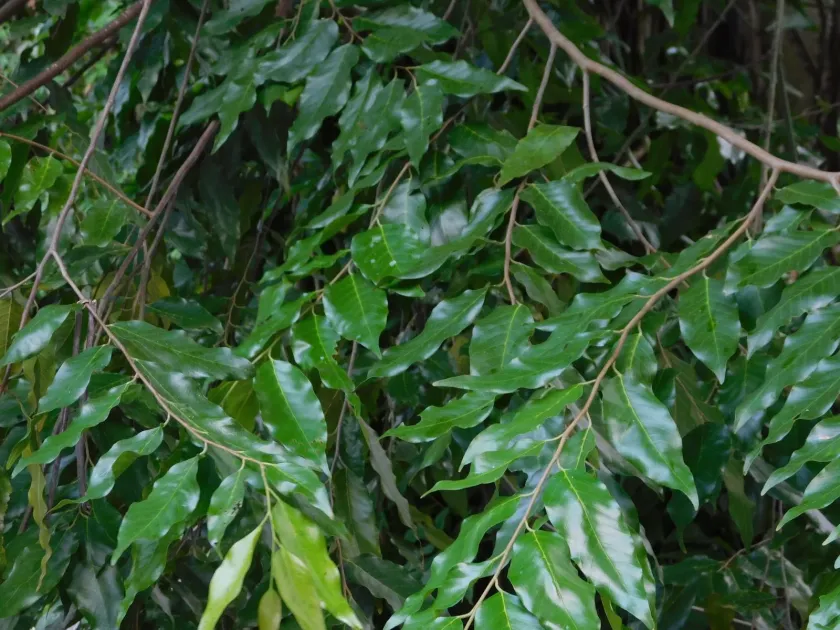
Description
Sowing dates
Hopea odorata belongs to the Dipterocarpaceae family and is a large evergreen tree capable of reaching 45 meters in height.
Propagation is mainly performed via seeds, which lose their viability very quickly after falling to the ground.
Sowing should be carried out immediately after harvest, ensuring high substrate moisture to facilitate rapid germination.
Nurseries typically utilize container-based methods to raise seedlings before transplanting them into forests or plantations.
The optimal time for planting is the beginning of the rainy season, which provides the necessary moisture for early root development.
Growing requirements
This species requires a tropical climate with high rainfall and consistent temperatures throughout the year.
It prefers deep, well-drained alluvial soils and is commonly found along riverbanks and near water bodies.
The tree is shade-tolerant when young but becomes heliophilic as it matures, requiring significant light for vigorous growth.
The ideal altitudinal range for cultivation is between 0 and 600 meters above sea level within its natural range.
In regions with distinct dry seasons, supplemental irrigation is essential to maintain growth during the tree's formative years.
Yield
The wood of Hopea odorata is highly valued in the global timber market for its exceptional strength and durability.
Biomass accumulation rates depend heavily on soil fertility and stand density, showing robust potential under good management.
Industrial applications include premium furniture production, boat building, railway sleepers, and heavy structural timber.
The resin extracted from the trunk is used in traditional medicine and the varnish industry, providing additional revenue streams.
The rotation cycle for technical maturity spans several decades, marking it as a significant long-term forestry asset.
Main diseases and pests
Young seedlings are frequently browsed by ungulates and small rodents within their natural habitat.
Root rot pathogens may affect plantation stocks if drainage is poor or if water stagnation occurs.
Seed-boring insects, particularly weevils, pose a major threat to seed storage, significantly reducing viability rates.
Defoliating insects can retard growth in younger trees, although they rarely cause mortality with proper monitoring.
The primary threat to wild populations remains habitat loss due to land-use change and unsustainable logging practices.
Harvesting
Seed collection must be done manually immediately after dispersal to prevent decay in the forest floor environment.
Logging operations must adhere to sustainable forestry standards to ensure the long-term regeneration of the timber stock.
The timber requires slow, careful seasoning to prevent warping and cracking due to its high density and complex fiber structure.
Heavy log transport requires specialized machinery due to the massive scale and weight of mature trunks.
Wood processing residues are often repurposed for bioenergy or as raw material for the pulp and paper industry.