
Homonoia riparia
Homonoia riparia
Description
Growing requirements
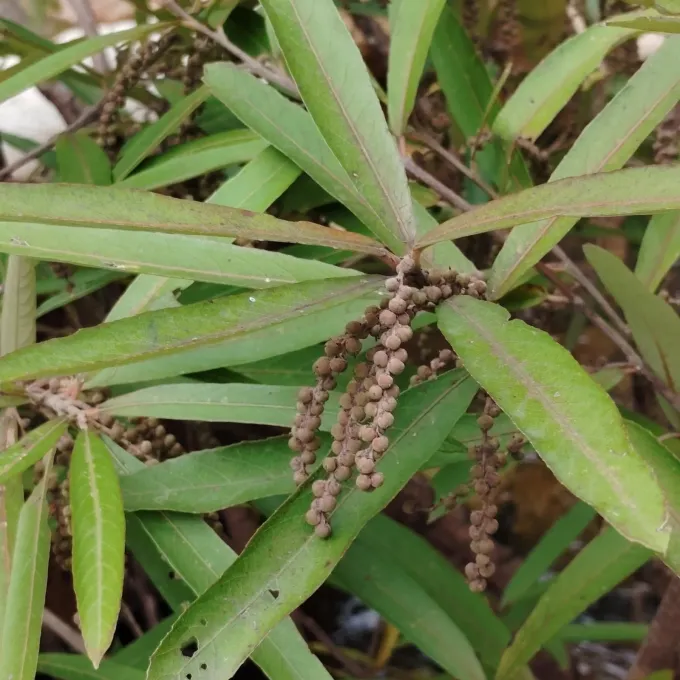
Homonoia riparia is an evergreen shrub belonging to the Euphorbiaceae family. In its natural environment, the plant grows to a height of 1 to 3 meters, featuring narrow, lanceolate leaves that bear a striking resemblance to willow foliage.
Native to South and Southeast Asia, including India, Indochina, and the Malay Archipelago, this species thrives in riparian zones. It is commonly found along riverbanks and streams, preferring rocky or sandy substrates where the soil moisture is consistently high.
The plant has specific environmental demands, requiring high light intensity for optimal growth. While it prefers sunny locations, its unique physiological adaptation allows it to withstand temporary flooding during monsoon seasons, making it an excellent candidate for erosion control.
Successful cultivation requires alluvial, well-aerated soils with a neutral to slightly acidic pH. The plant does not tolerate waterlogged, heavy clay soils, which can suffocate the root system and inhibit nutrient uptake.
While not a traditional industrial crop, Homonoia riparia serves critical roles in environmental engineering. It is widely utilized for stabilizing riverbanks and protecting land from erosion, as well as being integrated into tropical landscaping designs.
Main diseases and pests
The primary health issues for Homonoia riparia are associated with high humidity and poor air circulation, which can trigger fungal outbreaks such as powdery mildew or various forms of collar rot at the base of the stem.
Pests that commonly affect this culture include typical members of the Euphorbiaceae family, such as spider mites, scale insects, and mealybugs. These pests are particularly problematic during dry spells when the plant’s natural defenses are compromised.
Effective management against diseases involves the application of broad-spectrum fungicides upon the first detection of foliar damage. Maintaining appropriate plant spacing is essential to ensure adequate airflow and prevent the development of moist microclimates.
Systemic insecticides are recommended for controlling pest infestations. In natural populations, pest management is often kept to a minimum, given the plant’s robust regenerative capacity and hardiness in its native riparian habitat.
Preventative measures include regular sanitary pruning to remove infected or dead branches. It is crucial to dispose of diseased plant material safely away from the growing site to minimize the risk of pathogen spread within the plantation.