
Homalomena rubescens
Homalomena rubescens (Roxb.) Kunth
Description
Growing requirements
Homalomena rubescens is a perennial herbaceous plant belonging to the Araceae family. It is native to the tropical rainforests of Southeast Asia, thriving in the warm, humid understory of regions extending from India to Southern China.
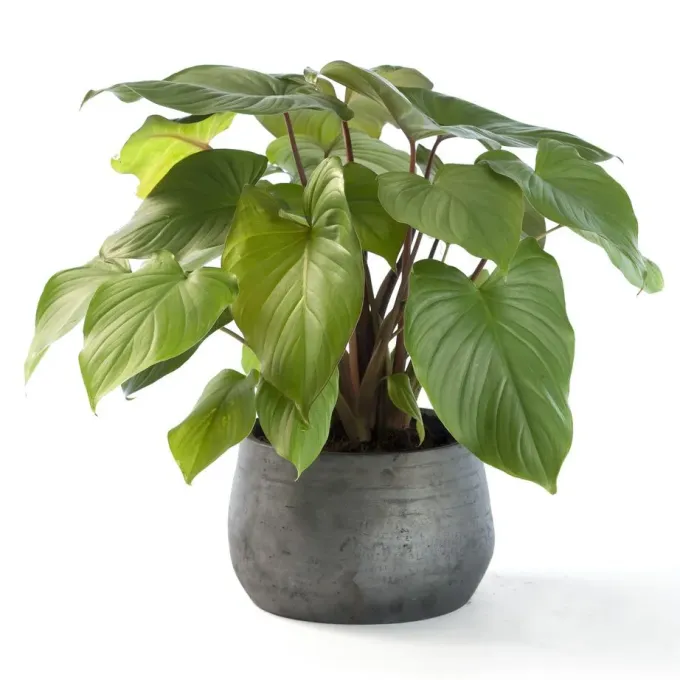
Botanically, this species is recognized by its attractive, deep green heart-shaped leaves and distinct reddish petioles. It is a slow-growing plant that develops a rhizomatous root system, which requires careful management to prevent compaction and decay.
The cultural requirements for this plant are centered on mimicking its native tropical environment. It thrives in ambient temperatures between 20 and 26 degrees Celsius and requires high humidity levels to prevent the edges of the leaves from browning and drying out.
Regarding soil, a well-draining, airy medium is essential. A mixture composed of peat moss, pine bark, perlite, and charcoal allows the roots to breathe while maintaining the consistent moisture necessary for healthy foliage development.
Light requirements are moderate, with the plant performing best in bright, indirect sunlight. Harsh, direct sunlight will scorch the leaves, while insufficient light may slow down the growth rate and result in less intense leaf coloration.
Main diseases and pests
Spider mites are the most common pest, particularly in environments with low humidity. Regular inspection of the leaf undersides and occasional misting can help prevent infestations before they become unmanageable.
Mealybugs can also infest the plant, hiding in the nooks where the petioles emerge from the stems. Early intervention with insecticidal soaps or neem oil is highly effective in controlling these pests without damaging the foliage.
Root rot is the most significant disease-related threat, usually caused by overwatering or soil that lacks adequate aeration. Once the rhizome begins to rot, recovery is difficult, making proper drainage the primary defense mechanism.
Leaf spot diseases, often caused by fungal pathogens, can appear if water is left sitting on the foliage for extended periods in cool conditions. Improving air circulation around the plant is the most effective cultural practice to mitigate this risk.
In addition to pests and diseases, nutrient imbalances can manifest as interveinal chlorosis. Providing a balanced, water-soluble fertilizer at half-strength during the growing season will help maintain the plant's health and resistance to stressors.