
Hoita macrostachya
Hoita macrostachya
Description
Growing requirements
Hoita macrostachya, commonly known as large-spiked leather root, is a perennial herbaceous plant belonging to the Fabaceae family. It is native to the western regions of North America, where it typically inhabits moist environments like stream banks and canyons.
The plant thrives in deep, well-drained soils with consistent moisture levels. Its root system is structurally adapted to anchor the plant in loose soils, often near water sources, which supports its robust vertical growth during the spring and summer months.
Environmentally, Hoita macrostachya requires a temperate climate with sufficient solar radiation to promote flowering. It is well-adapted to areas with Mediterranean-influenced weather patterns, showing resilience during the dry summer season if the water table remains accessible.
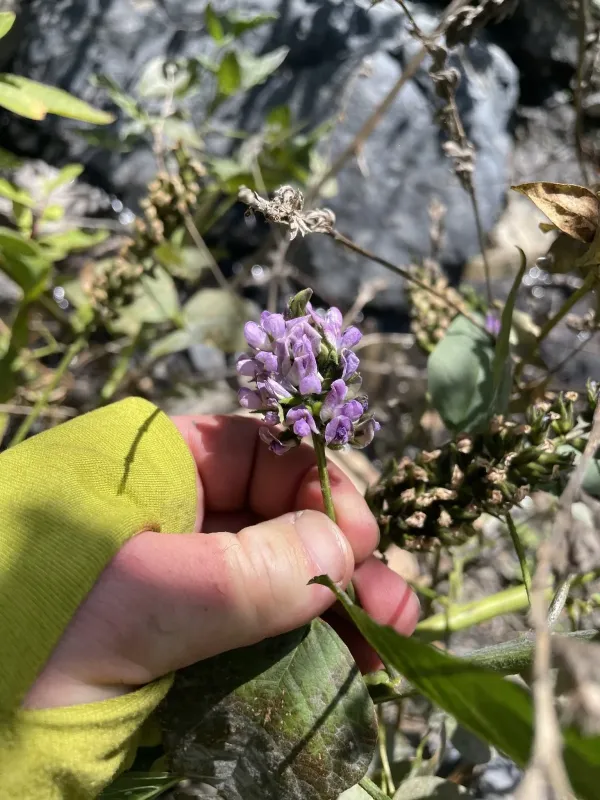
Botanically, it is recognized by its trifoliate leaves and large, dense racemes of flowers that vary in color from pale lavender to purple. These structures are not only important for reproduction but also serve as a source of nectar for local pollinators.
In agricultural practice, the species is investigated for its potential in soil restoration and sustainable forage production. Its nitrogen-fixing capability makes it a valuable candidate for green manure strategies in appropriate regional contexts.
Main diseases and pests
Like many perennial legumes, Hoita macrostachya is susceptible to powdery mildew, which can significantly reduce foliage quality under humid and stagnant air conditions, hindering the plant's overall health.
Root rot represents a critical threat when soil drainage is poor. Excessive water accumulation around the root crown facilitates the development of soil-borne pathogens, which can prove fatal to established stands of the plant.
Herbivorous insects, including aphids and various leaf-feeding beetles, may cause damage during the active growth phase. Managing these pests requires regular field scouting and, when necessary, targeted intervention to prevent mass outbreaks.
Weed competition during the seedling stage is a significant limiting factor for successful establishment. Early-season control measures are essential to ensure the plant can develop its primary root system without competing for resources.
Integrated pest management (IPM) strategies, including crop rotation and the maintenance of diverse field margins, are recommended to sustain the health of Hoita macrostachya plantings and mitigate risks from both biotic and abiotic stressors.