
Hohenackeria exscapa
Hohenackeria exscapa
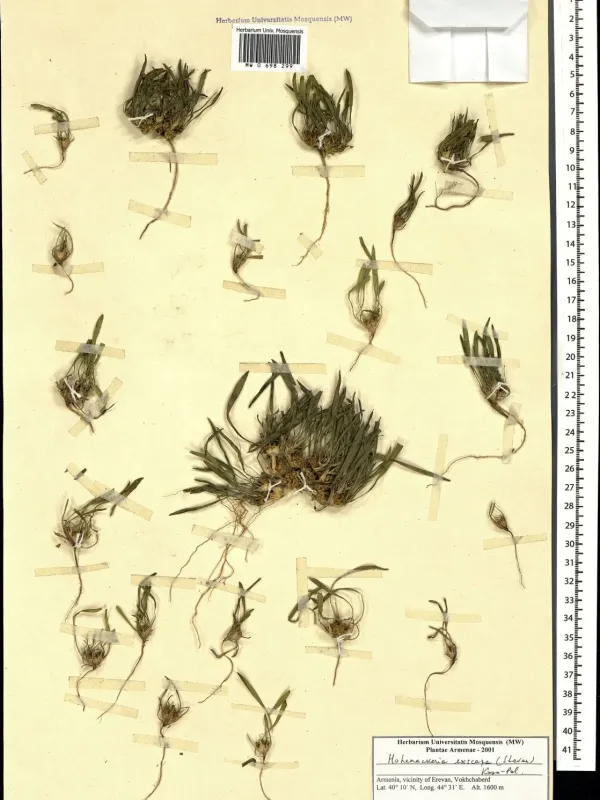
Description
Growing requirements
Hohenackeria exscapa is a perennial herbaceous plant belonging to the Apiaceae (parsley) family. It is a scientifically notable species characterized by its dwarf growth habit, where the stem is extremely reduced or almost absent, distinguishing it from many other representatives of the family.
The plant is native to the mountainous regions of Southwest Asia and the Caucasus. It is naturally adapted to rugged, rocky landscapes and arid meadows where it survives in harsh, nutrient-poor soils that would be unsuitable for standard agricultural crops.
Regarding its environmental requirements, the plant thrives in full sun exposure. It is highly sensitive to soil drainage; thus, cultivating it requires a substrate that mimics its natural stony habitat, ensuring that water does not accumulate around the crown of the plant.
Soil preferences lean towards light, well-draining, and slightly alkaline mediums. Since the species is accustomed to mountainous conditions, it demonstrates high resilience to cold temperatures and solar radiation, but it does not tolerate high humidity or waterlogged soil conditions.
In terms of agricultural and economic use, Hohenackeria exscapa is currently classified more as a botanical specialty rather than a commercial crop. Its primary utility lies in botanical research and conservation, with potential future applications in specialized ornamental horticulture for rock gardens and alpine ecosystems.