
Adriatic lizard orchid
Himantoglossum adriaticum
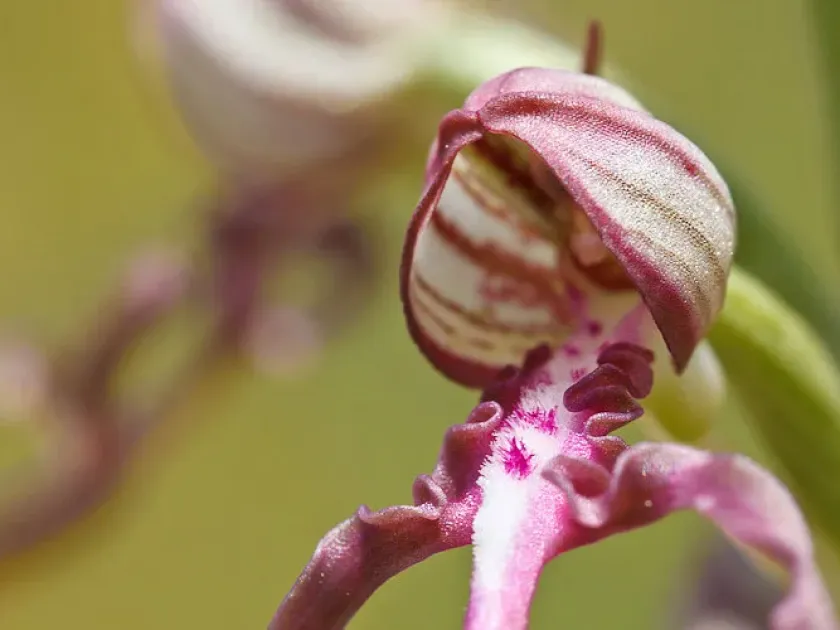
Description
Growing requirements
The Adriatic lizard orchid (Himantoglossum adriaticum) is a distinctive member of the Orchidaceae family. It is a perennial plant primarily found in the regions surrounding the Adriatic Sea and parts of Central Europe, often thriving in specialized calcareous habitats.
Botanically, it is known for its tall inflorescence and uniquely shaped labellum. The species prefers dry grasslands, limestone slopes, and open woodlands where it can access sufficient sunlight without being overwhelmed by aggressive competitive vegetation.
Regarding soil requirements, this orchid is strictly calciphilous. It thrives in well-drained, nutrient-poor alkaline soils that support the growth of specific mycorrhizal fungi, which are essential for the plant's nutrient uptake.
It is important to note that the Adriatic lizard orchid is not a crop in the traditional agricultural sense. It has no history of cultivation for food, forage, or industrial production; instead, it is a subject of conservation biology and botanical interest.
The lifecycle of this orchid is complex and slow, requiring stable environmental conditions to complete its development from seed to a mature, flowering plant, often taking several years.
Main diseases and pests
The primary threats to Himantoglossum adriaticum stem from habitat destruction. The conversion of traditional meadows into intensive agricultural land is the most significant factor reducing its population numbers.
The cessation of traditional mowing and grazing regimes leads to scrub encroachment. When grasses and shrubs grow too tall, they shade out the orchid, preventing it from obtaining the light it needs to produce energy for the next cycle.
Chemical pollutants, including nitrogen deposition from fertilizers used on nearby farms, can alter soil chemistry and damage the delicate symbiotic fungi the orchid relies on for survival.
Specific pests and pathogens affecting the roots and tubers can result in local population declines, especially in already stressed or fragmented environments.
Climate change poses a long-term risk, as altered precipitation patterns and increased temperatures can disrupt the specific timing of the orchid's growth and the activity of its insect pollinators.