
Himalayan bamboo
Himalayacalamus falconeri
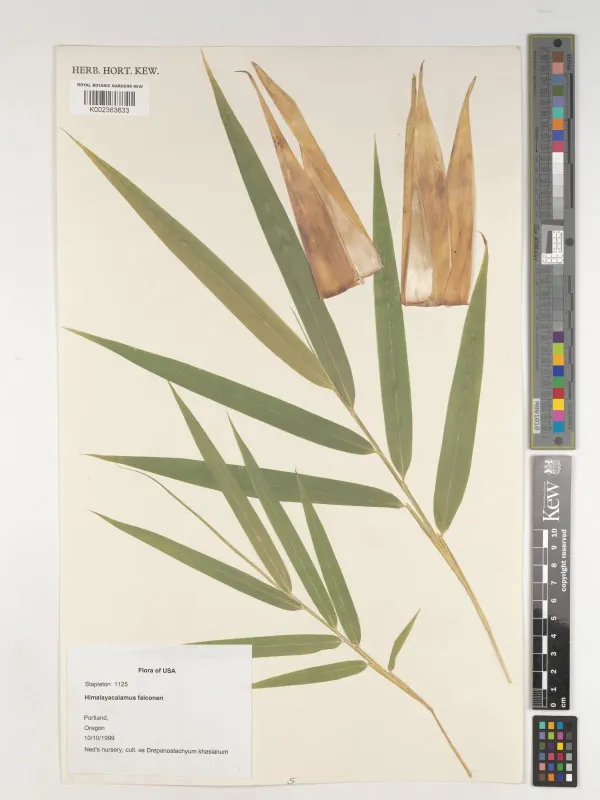
Description
Growing requirements
Himalayan bamboo (Himalayacalamus falconeri) is an impressive perennial evergreen species belonging to the grass family (Poaceae). It is distinguished by its graceful, slender culms that often exhibit a powdery blue or glaucous coating, making it a highly desirable plant for ornamental purposes.
Originating from the mountainous regions of the Himalayas, including Nepal and northern India, this species is well-adapted to cool, humid environments. Unlike tropical bamboo varieties, it thrives in temperate climates where the seasonal temperatures remain moderate throughout the year.
Cultivation requirements involve planting in fertile, well-draining soil rich in organic matter. A slightly acidic to neutral soil pH is preferred, and the site should ideally provide partial shade or filtered sunlight to protect the leaves from scorching during intense mid-day heat.
Agrotechnical care includes maintaining consistent soil moisture, as this plant does not tolerate drought well. During the growing season, regular watering and the application of balanced organic fertilizers are recommended to support the rapid development of new shoots.
The primary economic and landscape use of Himalayacalamus falconeri is for garden design, where it is utilized to create privacy screens, hedges, or focal points in woodland-style gardens. Its clumping growth habit makes it easier to manage compared to invasive running bamboo species.
Main diseases and pests
Fungal diseases represent a significant threat to Himalayan bamboo, particularly when grown in stagnant or poorly ventilated environments. Excessive moisture around the root zone can trigger rot, which may cause the decline or death of the entire clump.
Pests such as spider mites and mealybugs are the most common concerns for this bamboo species. These insects feed on the sap of the culms and leaves, causing discoloration, loss of vigor, and a noticeable reduction in the plant's ornamental appeal.
- Spider mites (thrive in dry conditions)
- Mealybugs (often found in leaf axils)
- Aphids (attract sooty mold)
To mitigate the risk of pest infestations, it is important to inspect the foliage regularly and ensure good air circulation within the canopy. Pruning away old or congested canes helps maintain plant health and prevents the accumulation of humidity that favors fungal pathogens.
In cases of severe infestation, targeted applications of systemic insecticides or horticultural oils may be necessary. Always follow integrated pest management principles by first attempting to improve environmental conditions and physically removing pests before resorting to chemical treatments.