
Himalayan honeysuckle
Leycesteria formosa Wall.
Description
Growing requirements
Leycesteria formosa, commonly known as Himalayan honeysuckle or flowering nutmeg, is a deciduous shrub within the Caprifoliaceae family. Native to the Himalayan region and parts of China, it is prized for its exotic appearance and rapid growth rate in suitable climates.
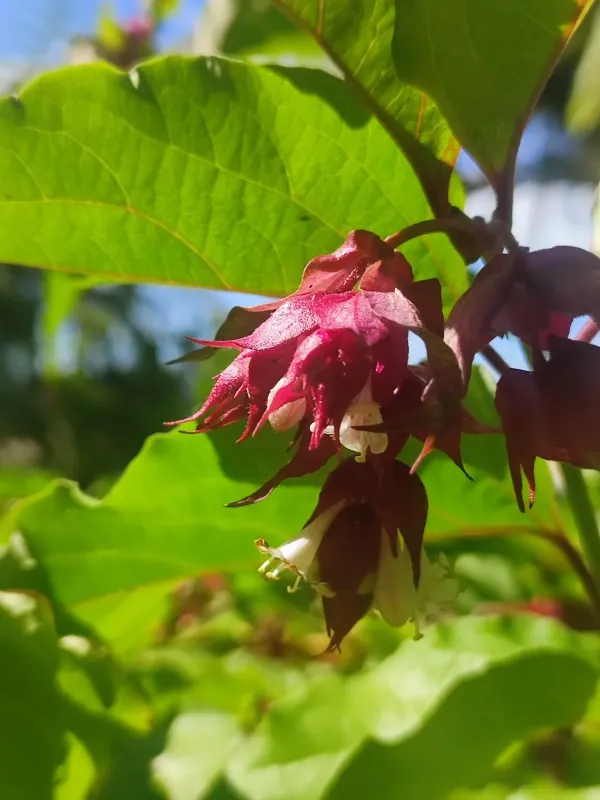
The plant features arching, hollow, green stems that remain attractive throughout the year. Its foliage consists of opposite, ovate-lanceolate leaves, and during the flowering season, it produces pendant racemes of white flowers protected by deep purple, leaf-like bracts.
To thrive, this plant requires well-drained, fertile soil enriched with organic matter. While it prefers full sun to light shade, it is essential to provide protection from drying winds, which can damage the foliage and delicate inflorescences during the summer months.
Agrotechnical practices involve regular watering throughout the growing season to keep the soil consistently moist but not waterlogged. Pruning is essential; it should be performed in late winter or early spring to remove dead wood and encourage the growth of vigorous new stems that will bloom in late summer.
In terms of usage, Leycesteria formosa is primarily an ornamental shrub. It is commonly utilized in borders, woodland gardens, and as a focal point in landscapes due to its unique berries and long-lasting bracts that provide visual interest well into the autumn season.
Main diseases and pests
The primary concern for Leycesteria formosa is the risk of root rot, which typically occurs in soils with poor drainage. Establishing proper drainage channels is the most effective way to protect the root system from fungal pathogens.
Aphids can occasionally infest the growing tips, particularly during warm, humid weather. While these pests rarely kill the plant, they can stunt growth and should be treated with insecticidal soaps if a heavy infestation is observed.
Although generally hardy, the shrub may suffer from frost damage to its upper branches in severe climates. It is recommended to mulch the base heavily in late autumn to ensure that the root system remains viable for regrowth in the spring.
Nematodes are a potential threat in heavy, clay-based soils, which can weaken the plant's structural integrity. Integrating organic compost into the planting site helps create a healthier soil environment that is less hospitable to such soil-borne pests.
General hygiene in the garden, such as removing debris and preventing the crowding of plants, is vital to maintaining good air circulation. This practice significantly reduces the likelihood of foliage-related fungal diseases throughout the growing season.