
Dame's rocket
Hesperis matronalis L.
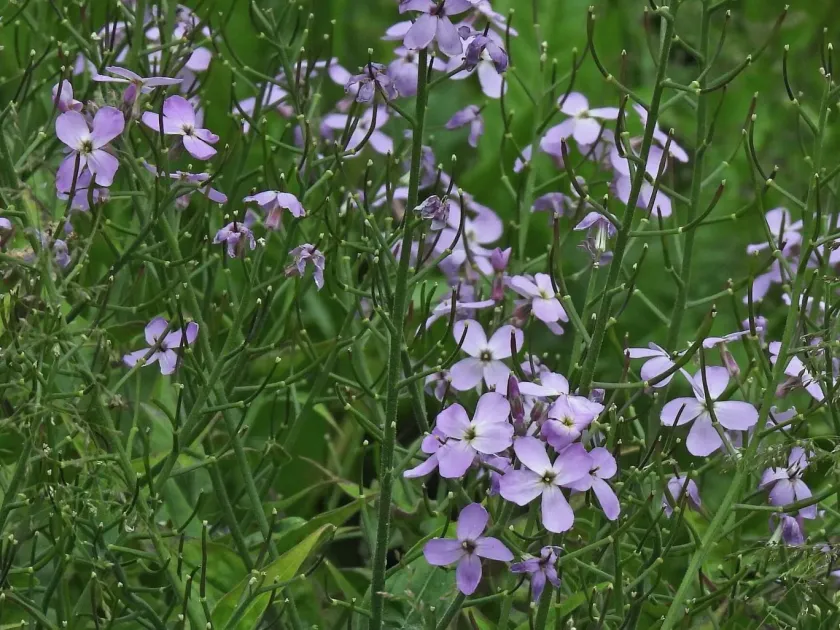
Description
Sowing dates
Dame's rocket belongs to the Brassicaceae family and is widely valued as both an ornamental and a source of essential oils.
Sowing in open ground is usually carried out in early spring, as soon as the soil can be worked, to allow for early establishment.
Alternatively, seeds can be sown in late summer or early autumn, which ensures a strong root system before winter dormancy.
The seeds should be sown thinly and covered with a light layer of soil, as they require minimal depth to germinate effectively.
Proper spacing is crucial; plants should be thinned to about 30 cm apart to ensure airflow and reduce humidity around the foliage.
Growing requirements
The crop thrives in sunny or partially shaded locations, making it versatile for various garden environments and landscape uses.
Well-drained, fertile soil with a neutral pH is ideal for promoting vigorous growth and long-lasting flowering spikes.
Consistent moisture is required during the growing season, though the plant is capable of handling brief periods of moderate drought.
Soil structure should be friable and rich in organic matter to support the needs of this biennial plant species.
Temperature tolerance is high, as the species is adapted to temperate climates and requires no special protection during harsh winters.
Main diseases and pests
Crucifer flea beetles are the primary pests, often attacking seedlings and causing significant damage to the leaf tissue.
Powdery mildew is a common fungal threat, particularly in late summer when the weather becomes humid and nights grow cooler.
Root rot issues can occur if the soil remains waterlogged, which is why appropriate drainage is a non-negotiable requirement.
Integrated pest management, including regular inspection and the use of organic insecticidal soaps, is effective for controlling beetle populations.
To prevent disease outbreaks, gardeners should practice crop rotation and ensure that plants are not overcrowded in the garden beds.