
Herbertia lahue
Herbertia lahue
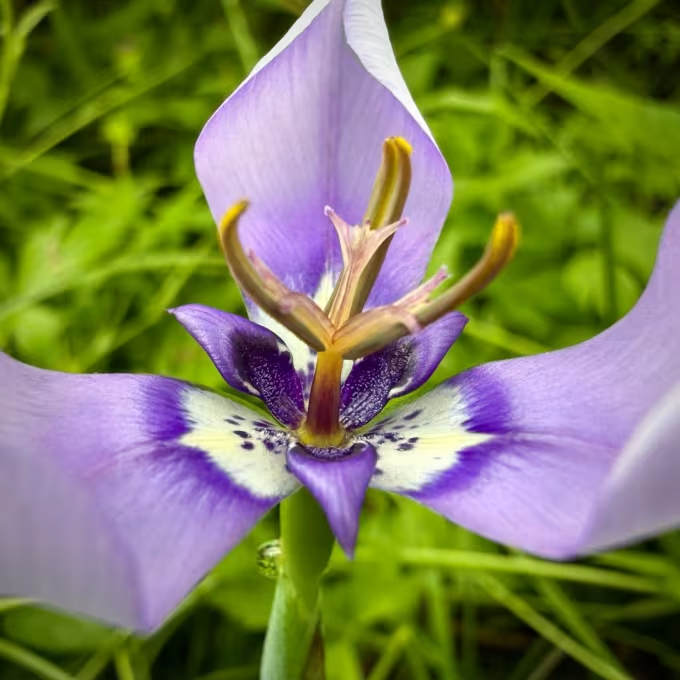
Description
Sowing dates
Herbertia lahue is a distinctive bulbous plant belonging to the Iridaceae family. Its life cycle involves a period of active growth followed by a dormant stage, which is critical for the success of its cultivation in both garden and nursery settings.
Planting of the bulbs should occur in the spring after the risk of frost has completely passed and the soil has reached a stable temperature. It is advisable to plant them at a depth of approximately 5-8 cm to ensure proper development of the roots and stability of the stem.
Seed propagation is also possible, although it requires a longer period for the plant to reach maturity. Seeds should be sown in a well-drained substrate, covering them lightly with soil to maintain the necessary humidity for germination.
When arranging the beds, maintain a spacing of at least 15 cm between plants. This layout helps prevent the overcrowding of bulbs, which is a common cause of poor air circulation and subsequent development of various physiological disorders.
After planting, the soil surface can be lightly mulched to retain moisture and suppress weeds, ensuring that the young shoots of Herbertia lahue have access to all available nutrients without competition from invasive species.
Growing requirements
This species is native to South American climates, favoring environments that provide ample sunlight. Ideally, the plants should be situated in full sun to partial shade, which allows for robust growth and optimal flowering frequency.
Soil composition is of paramount importance; Herbertia lahue thrives in light, porous, and well-drained soils. If the native soil is too heavy, the addition of organic matter and coarse sand is highly recommended to prevent waterlogging.
Water management should be cautious. The plant requires regular watering during the growth phase but demands a drier environment during its dormant period. Any sign of soil compaction must be addressed to keep the root zone oxygenated.
Fertilization with a balanced, low-nitrogen compound is beneficial during the spring growth phase. Over-fertilization, especially with nitrogen, can lead to excessive foliage growth at the expense of floral production and bulb health.
In terms of temperature, Herbertia lahue is not frost-hardy in most temperate zones. Consequently, in cooler regions, the bulbs should be lifted in autumn and stored in a cool, dry, and dark environment until the following spring season.
Main diseases and pests
Fungal infections of the bulbs represent the most significant threat to this crop. Issues such as Fusarium and various rots are almost exclusively caused by poor drainage and excessive moisture, which create a perfect environment for pathogens.
Insect pests, including aphids and spider mites, may infest the foliage during warm and dry periods. Regular monitoring of the underside of the leaves is necessary to catch infestations early and apply corrective treatments if required.
Preventive measures include the inspection of bulbs before storage. Any soft or damaged bulbs should be discarded to prevent the spread of rot throughout the storage container during the dormant winter months.
Slugs and snails can be highly destructive to the emerging shoots of the plant. Using physical barriers or environmentally friendly pest control methods around the base of the plant can significantly mitigate this type of damage.
Maintaining a clean garden environment by removing dead plant debris reduces the overwintering sites for many pests and pathogens, thereby contributing to the overall longevity and health of the Herbertia lahue population.