
Henrardia persica
Henrardia persica
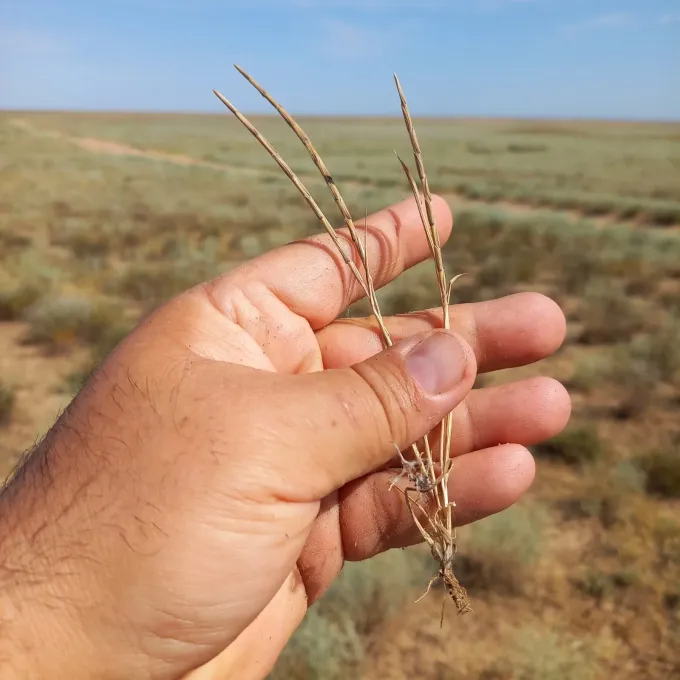
Description
Sowing dates
Henrardia persica is an annual grass that follows a biological rhythm aligned with the precipitation patterns of its native arid regions in Western Asia.
For successful establishment, sowing should coincide with the beginning of the rainy season, allowing the seeds to imbibe water and germinate effectively before the onset of extreme weather.
Seed depth should be carefully managed, as the small size of the seeds requires shallow placement to ensure that the emerging plumule reaches the surface without exhausting energy reserves.
Adequate soil moisture is critical during the sowing phase, and rolling the soil surface after planting can significantly improve the contact between the seed and soil particles.
Spacing between rows should be optimized to allow for sufficient airflow and to reduce competition, which is vital for the development of healthy and vigorous plant stands.
Growing requirements
As a member of the Poaceae family, Henrardia persica is naturally adapted to harsh environments and is characterized by its ability to thrive under drought stress.
The plant demands high light intensity throughout its growth cycle, making it unsuitable for shaded areas or dense canopy environments where photosynthesis would be limited.
Soil structure is a significant factor, with the species performing best in well-drained, porous soils that prevent the build-up of excess moisture around the roots.
It prefers neutral to slightly alkaline soil types, which are common in its natural habitats, and it can tolerate lower nutrient levels better than most cultivated cereals.
Temperature resilience is another key attribute, as the plant has evolved to survive the significant diurnal temperature fluctuations typical of its semi-desert range.
Main diseases and pests
Fungal diseases such as rusts represent a primary threat, particularly during periods of high humidity or in micro-environments with poor air circulation.
Root rot pathogens become a significant risk factor if the field suffers from waterlogging or if drainage systems are inadequately maintained in the cultivation plot.
Aphids and other sap-sucking insects can cause severe damage during the early vegetative stages, potentially stunting the growth and reducing the overall yield potential.
Seed-borne pathogens can reduce germination rates, so the use of certified, disease-free seed stock is highly recommended for any commercial-scale agricultural trial.
Monitoring for signs of leaf spots or chlorosis is essential, and implementation of integrated pest management practices can help sustain crop health without overuse of chemicals.
Harvesting
Harvesting strategies for Henrardia persica depend on the end use of the crop, whether it is for hay production, forage grazing, or seed multiplication purposes.
If harvested for forage, the optimal timing is before full maturity to ensure the highest protein content and digestibility of the biomass for livestock feed.
For seed collection, the crop must be allowed to reach full physiological maturity, indicated by the straw-like color of the stalks and the hardening of the grain.
Mechanical harvesting equipment should be calibrated to minimize shattering losses, as the seeds of this grass can be delicate and prone to dispersal upon impact.
Post-harvest handling is critical to ensure the longevity of the seeds, requiring drying to a low moisture content before storage in cool, ventilated conditions to prevent spoilage.