
Heliomeris multiflora
Heliomeris multiflora
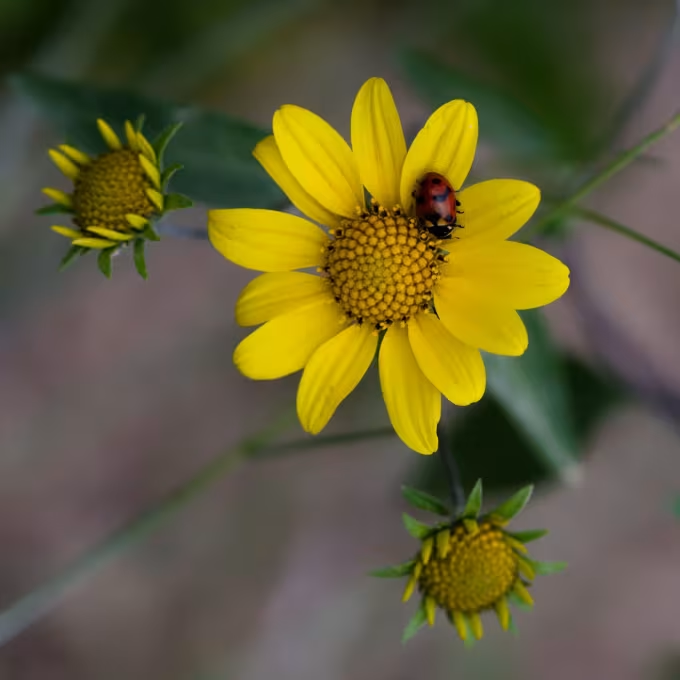
Description
Sowing dates
Sowing Heliomeris multiflora seeds is best performed in the early spring, following the final frost, to ensure optimal soil temperature for germination.
Greenhouse starting in late winter is highly recommended for commercial production to ensure robust seedlings ready for transplanting by late spring.
The seeds should be sown on the surface or covered very lightly with fine soil, as they require sufficient light to stimulate the germination process.
Spacing requirements involve maintaining a distance of at least 30 to 45 centimeters between individual plants to promote adequate airflow and development.
Pre-treatment of seeds through brief stratification can significantly improve uniformity in emergence across larger cultivation fields.
Growing requirements
Heliomeris multiflora, a member of the Asteraceae family, is a herbaceous perennial that originates from arid regions of North America.
The species is renowned for its exceptional drought tolerance, allowing it to thrive in conditions where many other herbaceous crops would fail.
Full sun exposure is a non-negotiable requirement for this plant, as insufficient light negatively impacts both flower density and structural integrity.
The ideal substrate for this crop is a well-draining soil type, ranging from sandy loam to rocky substrates, provided there is minimal water retention.
It performs exceptionally well in nutrient-poor environments, making it a low-maintenance choice for large-scale landscaping or ecological restoration projects.
Main diseases and pests
Root pathogens such as Pythium are the primary threat to this crop, particularly in fields where soil drainage is inadequate or water logging occurs.
Powdery mildew may manifest as a late-season concern if the foliage remains wet for extended periods or if air circulation around the plants is compromised.
Aphids are the most common insect pest, frequently targeting the tender new growth at the terminal points of the flowering stems during the peak season.
Spider mites can become a significant issue during periods of extreme heat and low humidity, causing rapid leaf discoloration and plant stress.
Integrated pest management strategies focusing on early detection and maintaining appropriate spacing are essential for minimizing the need for chemical intervention.