
Hebe buxifolia
Hebe buxifolia
Description
Growing requirements
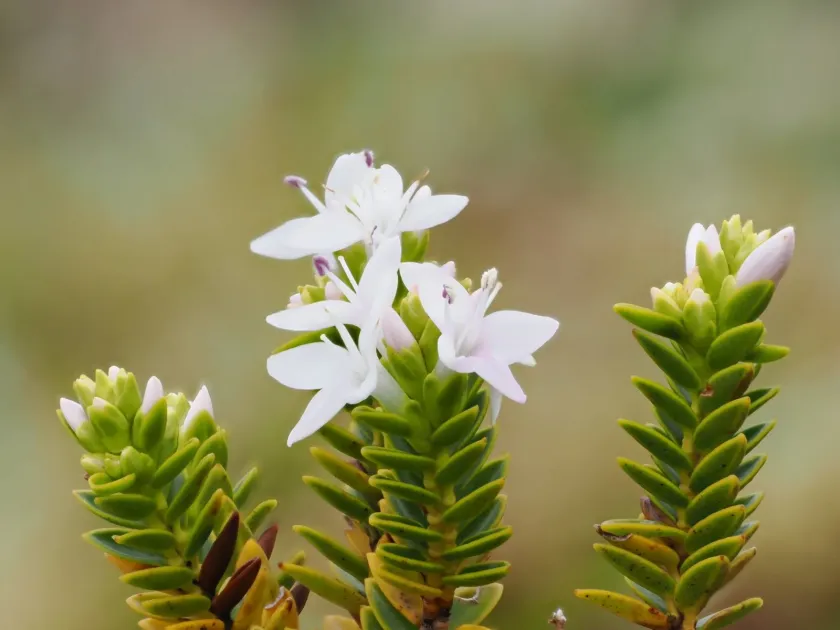
Hebe buxifolia, a member of the Plantaginaceae family, is a compact evergreen shrub native to New Zealand. It is highly valued in horticulture for its dense growth habit and glossy leaves that resemble those of the common boxwood, making it an excellent ornamental choice.
The plant thrives in well-draining, slightly acidic to neutral soils. In its natural habitat, it is accustomed to mountainous slopes, which is why providing adequate drainage is critical; the root system is extremely susceptible to rot if water remains stagnant in the growing medium.
Regarding climate, Hebe buxifolia prefers moderate temperatures and is generally hardy to USDA zones 8–9. While it can withstand light frosts, it requires protection from harsh, drying winds and freezing temperatures below -10°C to maintain its lush appearance throughout the year.
Regular but controlled watering is essential. The soil should remain consistently moist but never waterlogged. During the peak summer months, mulch can be applied around the base of the plant to help retain moisture and keep the root zone cool during periods of extreme heat.
The agricultural use of this shrub is strictly focused on ornamental landscaping. It is frequently employed in formal garden layouts, low hedge planting, and container gardening. Its ability to tolerate regular pruning allows gardeners to maintain specific shapes, enhancing its aesthetic appeal.
Main diseases and pests
The most common disease affecting this species is powdery mildew, particularly in environments with high humidity and poor air circulation. This fungal condition creates a white dust-like coating on the foliage, which can eventually lead to leaf drop and stunted plant growth.
Root rot is the primary physiological threat caused by overwatering or poor soil structure. If the soil becomes compacted, oxygen cannot reach the roots, leading to a rapid decline in plant health. This condition is often fatal and difficult to reverse once symptoms appear.
Pest issues often involve infestations of aphids and spider mites, which congregate on the undersides of leaves or along young, tender stems. These pests suck the sap from the plant, often causing yellowing and deformation of the foliage, which diminishes the shrub's ornamental value.
Integrated pest management should be used to control infestations. This includes the use of horticultural soaps or systemic insecticides when biological controls are insufficient. Maintaining plant vigor through proper fertilization and watering is the best primary defense against persistent pest attacks.
General maintenance, such as regular sanitation, pruning dead branches, and ensuring proper spacing between plants, significantly reduces the pressure from pests and diseases. By optimizing environmental conditions, the need for chemical intervention is minimized throughout the season.