
Common heather
Calluna vulgaris (L.) Hull
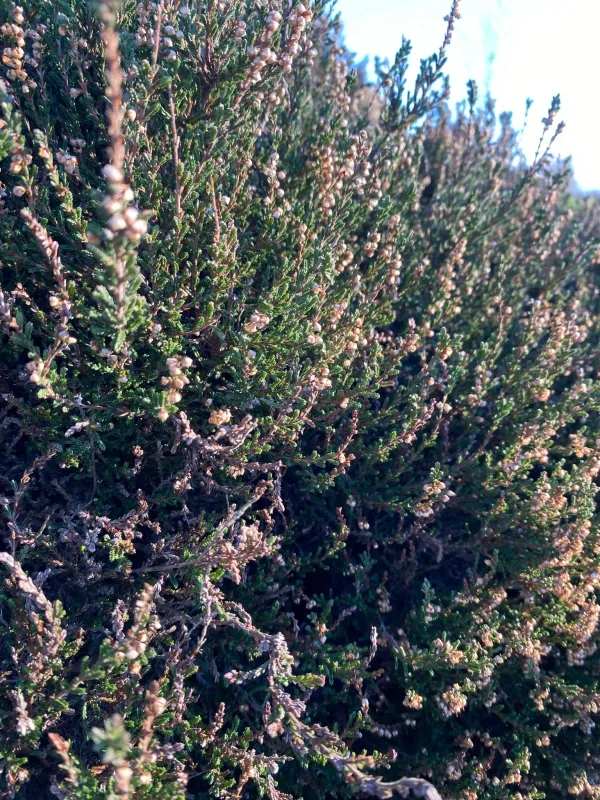
Description
Sowing dates
Common heather (Calluna vulgaris) is typically propagated via seeds or vegetative cuttings, with the latter being more popular for consistency.
Seeds are sown on the surface of acidic, well-drained substrate in early spring and kept under light conditions without covering them with soil.
For cuttings, semi-hardwood shoots are harvested in late summer and rooted in a mixture of peat and sand in a humid environment.
Transplanting to the field is best performed in early spring or autumn to ensure the root system establishes before extreme temperatures.
Establishing a dense stand is crucial for suppressing weed growth and maintaining the microclimate required by the root mycorrhiza.
Growing requirements
Calluna vulgaris belongs to the Ericaceae family and strictly requires acidic soils with a pH ranging from 3.5 to 5.5 to thrive.
It prefers full sun exposure and well-drained, nutrient-poor, sandy or peaty soils, avoiding waterlogged conditions at all costs.
Heather plants require moderate humidity but are susceptible to root rot if standing water persists around the root zone.
As an alpine and heathland species, it is highly cold-hardy, although winter protection with mulch is recommended in exposed, frost-prone areas.
The presence of symbiotic fungi (mycorrhiza) is essential, and common fertilizers should be avoided in favor of specialized Ericaceae products.
Yield
Common heather is a premier late-season honey plant, providing crucial forage for bees when most other nectar sources are scarce.
Honey production yields from healthy heather fields can reach significant levels, resulting in the highly sought-after, dark-colored heather honey.
In medicinal production, the flowering tops are harvested as raw material for extracts used in herbal medicine for their diuretic properties.
The yield of medicinal biomass is maximized when plantations are managed with regular pruning to prevent plants from becoming too woody.
Commercial ornamental nurseries evaluate yield based on the quantity and quality of container-grown shrubs ready for landscaping.
Main diseases and pests
Phytophthora root rot is the most serious threat, causing sudden wilt and death, often exacerbated by overwatering and poor drainage.
Powdery mildew may occur in stagnant, humid conditions, affecting the leaves and reducing the aesthetic and photosynthetic quality.
Spider mites are common pests in dry, hot weather, leading to yellowing of foliage and general plant decline if left untreated.
Integrated pest management strategies focusing on drainage and airflow are the most effective ways to prevent major outbreaks.
Regular monitoring during the growing season allows for early intervention with appropriate fungicides or miticides if necessary.
Harvesting
Medicinal harvesting is performed during the peak flowering stage in late summer, selecting only the top 20–30 cm of current-year shoots.
Material is collected manually or with mechanical harvesters in large plantations, ensuring that the woody base remains intact for recovery.
Drying must occur quickly in ventilated, dark areas to preserve the integrity of the active phytochemical compounds.
For honey production, the harvest is indirect and involves managing bee colonies and access to the blooming heather fields.
Post-harvest care includes light pruning to promote bushy growth, which ensures a more productive crop for the following year.