
Harrisonia abyssinica
Harrisonia abyssinica
Description
Growing requirements
Harrisonia abyssinica is a distinctive thorny shrub or small tree belonging to the Simaroubaceae family. It is widely distributed across tropical Africa, inhabiting savannahs, woodland areas, and rocky terrains.
The plant is highly valued for its ecological role as a drought-resistant species capable of thriving in harsh environmental conditions. Its deep root system allows it to survive in regions with significant dry seasons.
Regarding soil requirements, this species favors well-drained loamy or sandy substrates. It is not particularly demanding regarding soil fertility but thrives when adequate minerals are present for initial establishment.
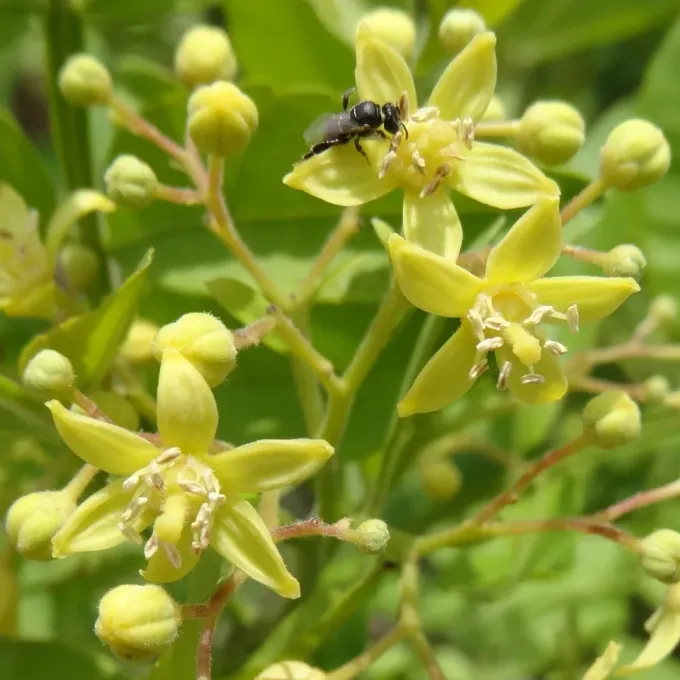
The botanical structure of the plant includes pinnate leaves and prominent, recurved thorns, which serve as a natural defense mechanism. The small yellow flowers eventually produce edible, though bitter, berries.
In agricultural and traditional contexts, Harrisonia abyssinica is managed for its medicinal properties. The bark and root extracts are scientifically studied for their potential antimicrobial and pharmacological activity.
Main diseases and pests
Fungal pathogens represent the primary threat to the health of Harrisonia abyssinica, especially in regions with high precipitation. Proper spacing between plants is essential to reduce humidity levels.
Pests such as scale insects and aphids often congregate on young shoots. While these pests rarely kill mature trees, they can significantly reduce the biomass production required for medicinal harvesting.
Root rot caused by stagnant water is a major concern for young seedlings. Establishing a raised bed or a gentle slope for planting can mitigate the risk of waterlogging significantly.
Weed management is vital during the early stages of growth, as the plant grows relatively slowly. Manual weeding is often preferred over herbicides to avoid accidental damage to the delicate bark.
Mechanical damage to the trunk or branches can facilitate the entry of wood-boring insects. Maintaining the integrity of the plant structure through careful handling is crucial for long-term survival.