
Haplomitrium hookeri
Haplomitrium hookeri
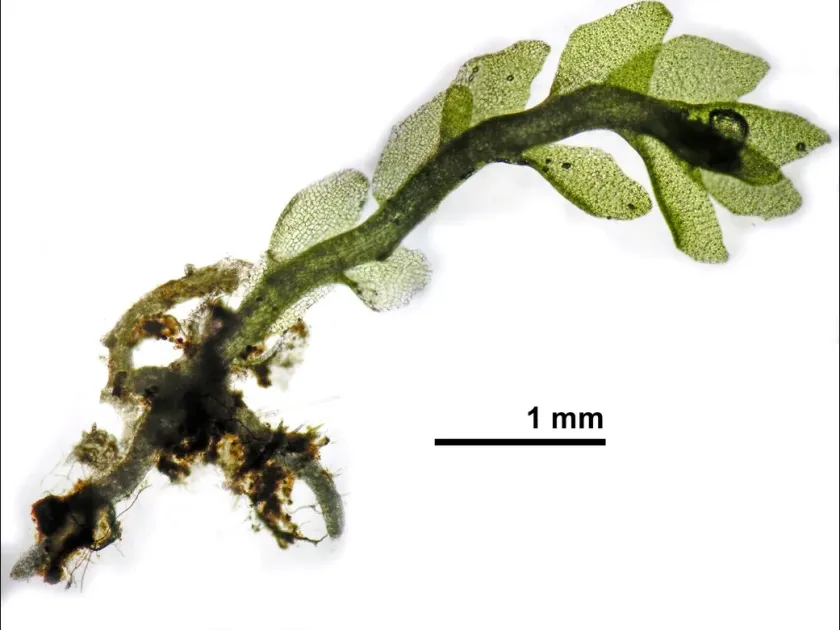
Description
Growing requirements
Haplomitrium hookeri is a unique species of liverwort belonging to the Haplomitriaceae family. It represents an ancient lineage of plants, significantly distinct from typical agricultural crops, and is primarily of scientific interest rather than commercial value.
The morphology of this plant is characterized by vertical stems arising from a subterranean, branched thallus. It lacks true roots, relying on moisture absorption directly through its surface tissues, which makes it extremely sensitive to environmental shifts.
Regarding its habitat, it is found in temperate and arctic regions of the Northern Hemisphere. It thrives in open, damp areas where there is minimal competition from faster-growing vascular plant species.
Requirements for the environment are extremely strict. The plant demands high atmospheric humidity and specific soil mineral compositions. Any attempt to cultivate this species within an agricultural framework will fail, as it cannot adapt to artificial soil conditions or standard farming techniques.
In terms of ecological importance, Haplomitrium hookeri serves as an indicator of ecosystem stability. Its presence suggests an undisturbed habitat, and it is protected by various conservation laws in many countries due to its rarity.
Main diseases and pests
Major threats to this species include wetland drainage and habitat fragmentation. Changes in hydrology directly impact the micro-environment necessary for the plant's survival and reproductive cycles.
Chemical contamination from agricultural runoff, including pesticides and fertilizers, acts as a primary threat. The lack of physiological barriers makes the plant highly susceptible to chemical toxicity.
The encroachment of invasive species into its habitat causes severe competition for space and resources. Because the liverwort grows slowly, it cannot compete with more aggressive flora in disturbed environments.
Climate change and subsequent warming contribute to the loss of suitable cool, moist habitats. Rising temperatures and altered precipitation patterns are significant stressors for this arctic-alpine species.
Because Haplomitrium hookeri is not an agricultural crop, there are no recorded diseases or pests typical of farming. Its survival is threatened primarily by environmental degradation rather than biological infestations.