
Halopeplis amplexicaulis
Halopeplis amplexicaulis
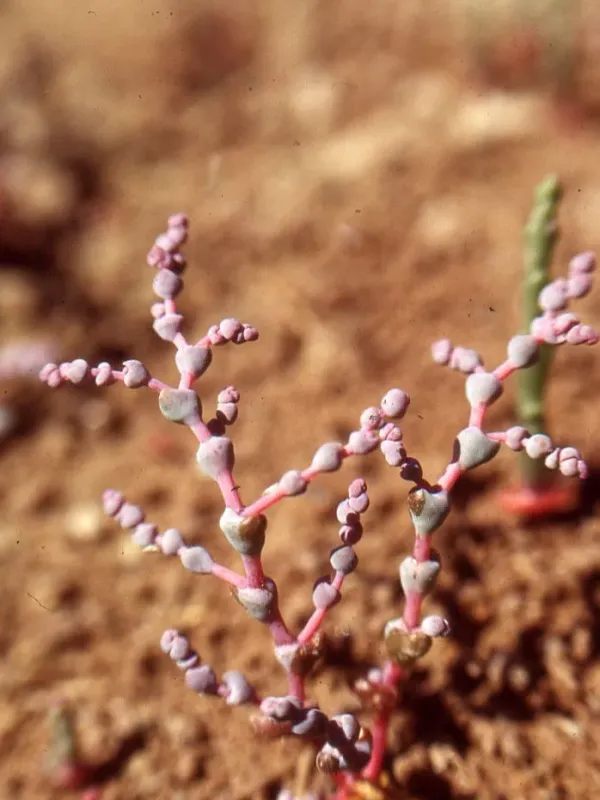
Description
Sowing dates
Sowing of Halopeplis amplexicaulis is typically performed in spring when soil temperatures allow for active seed germination in saline conditions.
The seeds are small and require minimal soil cover, as they rely on the specific chemical environment of salt pans to break dormancy.
It is crucial to maintain a moist environment during the early stages of seedling development, even in naturally salty soil conditions.
In a field setting, seeds can be broadcasted over prepared saline areas to ensure uniform distribution and density of the future crop.
Successful sowing depends on the timing, aligning the germination phase with the warming of the soil to accelerate growth.
Growing requirements
Halopeplis amplexicaulis belongs to the Amaranthaceae family and is recognized as a succulent halophyte adapted to high salinity environments.
The plant thrives in soil with high concentrations of sodium and magnesium, conditions that would prove toxic to conventional agricultural crops.
It requires abundant sunlight and is well-adapted to high-temperature, arid climates found along coastal regions and salt lake margins.
Soil texture should facilitate good drainage to prevent waterlogging, while simultaneously retaining sufficient mineral salts for plant intake.
High levels of solar radiation are beneficial for this species, as it utilizes photosynthesis efficiently in extreme heat conditions.
Yield
The biomass yield of Halopeplis amplexicaulis is determined by the availability of moisture and the degree of soil salinity during the growing season.
As a potential forage crop, it provides substantial green matter in areas where traditional vegetation cannot survive due to excessive salts.
Management of the harvest time is essential to balance the plant's nutritional density with its succulent, moisture-rich texture.
Although data on commercial yields are limited, experimental plots indicate robust growth rates under appropriate ecological parameters.
Productivity is highest when the plant is harvested before it enters the lignification phase of its lifecycle.
Main diseases and pests
Due to its high internal salinity, Halopeplis amplexicaulis is largely resistant to common agricultural pests that plague standard crops.
The primary threats include major shifts in local hydrology, such as excessive freshwater drainage that dilutes the salinity of its habitat.
Fungal diseases are rare but can occur if moisture remains trapped within the canopy for extended periods in humid weather.
Soil erosion caused by wind or water can damage young seedlings, requiring protective measures during the early growth stages.
Excessive grazing can lead to the depletion of population reserves, necessitating careful management of the surrounding ecosystem.
Harvesting
Harvesting involves cutting the succulent green shoots during the active vegetative phase before the onset of flowering and seed production.
Mechanical harvesting equipment must be adjusted to handle the moisture-rich tissue of the plant to avoid clogging and damage.
Immediate processing after harvesting is recommended to maintain the quality of the biomass and prevent decay in hot climates.
Seed collection is performed at the end of the season by gathering matured inflorescences and separating the seeds from plant debris.
Proper post-harvest storage should involve dry conditions to prevent the growth of mold and ensure the longevity of the gathered material.