
Needle seagrass
Halodule uninervis
Description
Growing requirements
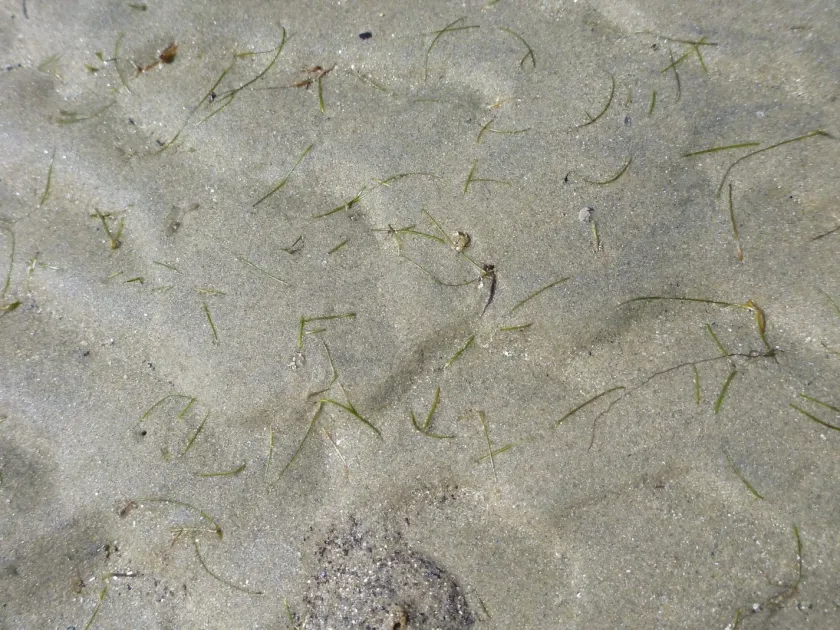
Halodule uninervis, widely known as needle seagrass, is a marine angiosperm belonging to the Cymodoceaceae family. It is a fundamental species in seagrass meadows, recognized by its thin, needle-like leaves that form extensive carpets across sandy and muddy shallow ocean floors.
This species is distributed throughout the tropical and subtropical regions of the Indo-Pacific. It is particularly noted for its high phenotypic plasticity, allowing it to adapt to varying light intensities and different levels of sediment nutrient availability within the intertidal and subtidal zones.
Needle seagrass thrives in well-illuminated waters where the photosynthetic rate can support its rapid growth. The plant utilizes a rhizomatous system to propagate vegetatively, which facilitates the stabilization of coastal sediments and protects the coastline from erosion by reducing wave energy.
Temperature remains a critical requirement for this species, with optimal growth typically occurring in waters ranging from 20 to 30 degrees Celsius. It exhibits tolerance to salinity fluctuations, making it a resilient colonizer in estuaries and areas influenced by freshwater runoff.
Ecologically, Halodule uninervis acts as a primary producer and a crucial habitat provider. It supports high biodiversity, offering nursery grounds for juvenile fish and crustaceans, and serves as a vital food source for herbivores such as dugongs and sea turtles in marine environments.