
Halimodendron halodendron
Halimodendron halodendron
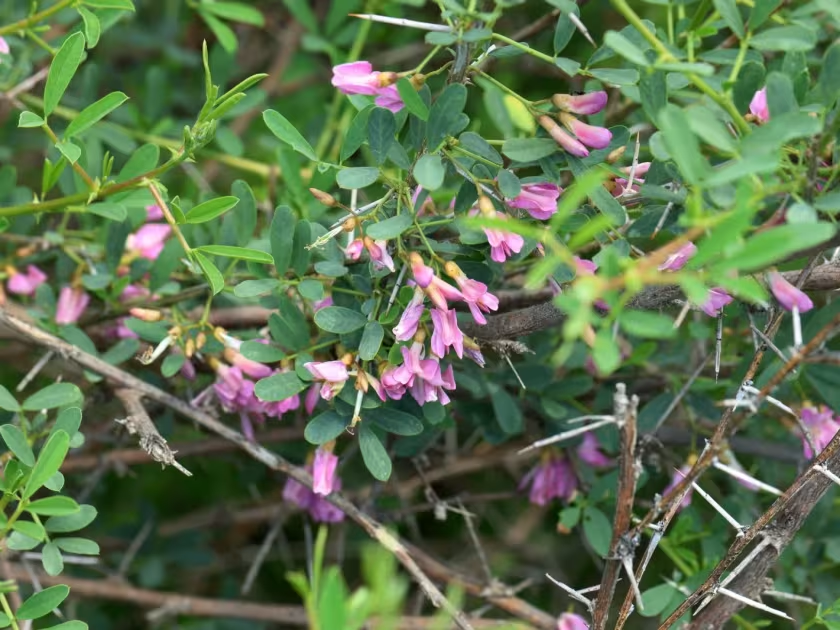
Description
Sowing dates
Propagation of Halimodendron halodendron is typically performed using seeds sown in the spring. Seeds require stratification or scarification to overcome the dormancy of their hard outer coat, which ensures a higher germination rate and more uniform emergence.
Seeds are planted at a depth of 2–3 centimeters in well-drained, porous soil. In nursery environments, maintaining a consistent but moderate moisture level is crucial during the germination phase to support the developing root system.
Vegetative propagation via root suckers is a highly effective method for expansion. Suckers should be separated from the parent plant during the dormant season, which facilitates strong establishment when replanted in the field.
As a member of the Fabaceae family, this species relies on symbiotic nitrogen-fixing bacteria. When planting in virgin soil, introducing an inoculum or soil from an established site can enhance the plant's ability to thrive in nutrient-poor conditions.
Spacing between plants should be sufficient to allow for the growth of its dense, thorny canopy, which is essential for developing healthy specimens and managing the plant effectively in large-scale settings.
##requirements##Halimodendron halodendron is a strict heliophyte and requires full sun exposure to maintain optimal vigor and flowering performance. Any level of shading can significantly impede its growth and diminish its structural integrity.
The species is exceptionally tolerant of saline and alkaline soil conditions, making it a premier candidate for reclaiming degraded landscapes and salt-affected lands where traditional crops would fail.
High drought resistance is a defining characteristic of this shrub, provided by its deep root system and specialized leaf anatomy that minimizes water loss. It is perfectly adapted to arid climates with prolonged hot, dry periods.
The salt tree is highly cold-hardy and can withstand significant seasonal temperature shifts. It thrives in open, exposed environments and serves as an effective windbreak, protecting fields and reducing wind-driven soil erosion.
The plant requires minimal inputs; its ability to fix nitrogen removes the need for synthetic nitrogen fertilizers, making it an economically and ecologically sustainable option for land management.
##yield##The primary use of this crop is in phyto-reclamation and environmental stabilization. It plays a critical role in anchoring shifting sands and preventing wind and water erosion in vulnerable rural landscapes.
In animal husbandry, the foliage serves as an emergency browse for camels, goats, and sheep. During the winter months, the protein content of the leaves provides a valuable supplement for livestock grazing on arid rangelands.
It is highly valued by beekeepers as a nectar-producing shrub. The blooming season occurs during the summer, providing a vital source of nectar for pollinators at a time when many other sources are exhausted.
The plant's dense thorns and ability to withstand heavy pruning make it an ideal choice for living fences, offering both security and beauty. Its ornamental qualities also support its use in urban xeriscaping.
On a macro-economic level, Halimodendron halodendron facilitates the rehabilitation of barren lands, gradually improving the soil structure and creating a more favorable microclimate for subsequent vegetation recovery.
##threats##While the plant possesses a robust natural defense, it can occasionally be attacked by leaf-eating insects. These infestations are rarely lethal and are generally considered aesthetic issues that do not affect the plant's long-term health.
Fungal issues, such as powdery mildew, may occur in conditions of excessive humidity and poor air circulation. Proper plant spacing and occasional pruning can effectively mitigate these risks without requiring chemical intervention.
Winter damage from rodents, such as hares and voles, can occur when food sources are scarce. Protecting the base of young shrubs is recommended in areas where rodent populations are high.
The shrub is naturally resistant to many common plant diseases, largely due to its evolutionary adaptation to harsh environments. This reduces the need for integrated pest management and chemical pesticides.
Given its resilience, Halimodendron halodendron maintains high vitality even under moderate urban air pollution, making it one of the most reliable woody plants for ecological projects in challenging industrial zones.