
Hagenia
Hagenia
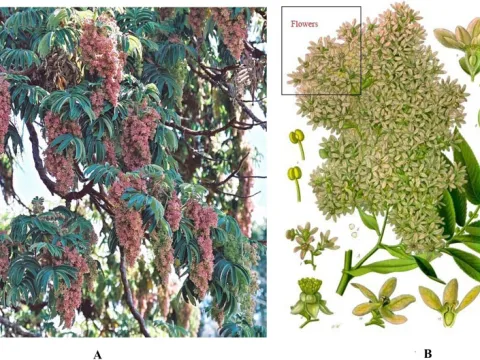
Hagenia (Hagenia abyssinica) is a prominent tree species in the Rosaceae family, native to the high-altitude regions of Eastern Africa. It is widely known in some regions by the name Cusso or Kousso.
What the section contains

Hagenia
The species typically thrives in montane forest ecosystems at altitudes between 2,000 and 3,500 meters. These areas are characterized by cool temperatures and frequent mist, which the tree requires for optimal development.
In terms of soil requirements, Hagenia prefers deep, well-drained, and nutrient-rich soils. It does not tolerate waterlogging, as its roots require proper aeration to maintain healthy metabolic functions.
Cultivation practices involve selecting sites with moderate light exposure for seedlings, while mature trees can withstand more direct sunlight. The tree is an essential component of local agroforestry systems in its native range.
Its primary economic use is derived from its inflorescences, which are traditionally used as a potent anthelmintic remedy in herbal medicine, owing to their specific phytochemical profile.
Hagenia is susceptible to various fungal pathogens that flourish in high-humidity environments. These fungi can infect the leaves and bark, leading to reduced vitality and poor development of inflorescences.
Insects, particularly wood-boring beetles, represent a significant threat to the structural integrity of the tree. They can introduce secondary bacterial infections that further weaken the plant.
Environmental stressors such as shifting precipitation patterns in highland areas can make the trees more susceptible to infestation and disease outbreaks.
To mitigate these risks, integrated pest management practices are recommended, focusing on the removal of infected wood and maintaining proper spacing between trees to improve air circulation.
Biological control methods are preferred, as chemical pesticides are often avoided to ensure the purity and safety of the harvested medicinal flowers.
The harvesting process for Hagenia involves the careful collection of the tree's flower clusters. This must be timed precisely with the blooming phase to maximize the yield of active compounds.
Harvesters traditionally perform the collection manually, ensuring that the tree's canopy is not damaged during the process to allow for consistent yields in subsequent years.
Post-harvest processing requires immediate drying of the flowers in shaded, well-ventilated areas to prevent enzymatic degradation and mold growth.
Storage is a critical stage; the dried flowers must be kept in cool, dry conditions away from light to retain their therapeutic efficacy over long periods.
Sustainability is a core component of the harvesting strategy, as the tree is vital for local ecology and the conservation of mountain forest biodiversity.