
Gymnacranthera farquhariana
Gymnacranthera farquhariana
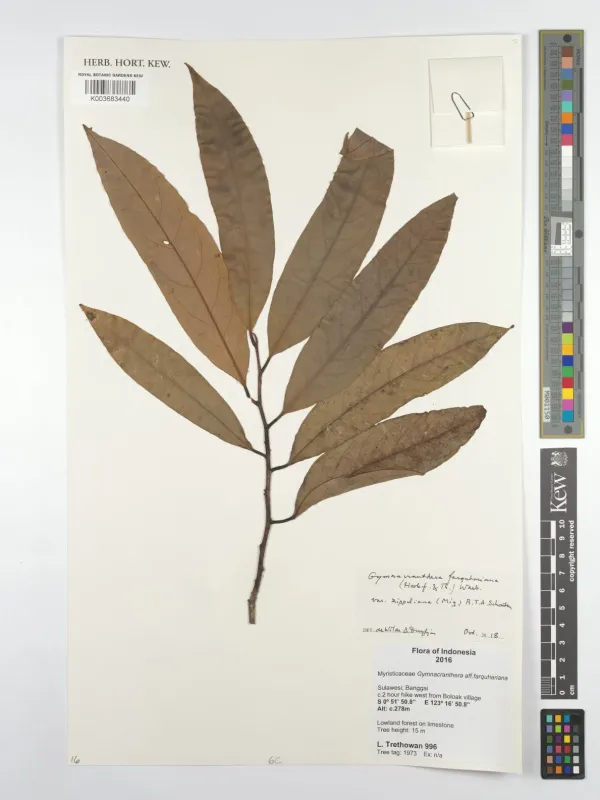
Description
Growing requirements
Gymnacranthera farquhariana is an evergreen tree species belonging to the Myristicaceae (nutmeg) family. It is native to the tropical rainforests of Southeast Asia, ranging from India to the Malay Archipelago.
The tree thrives in lowland dipterocarp forests where the environment is characterized by consistently high humidity and warm temperatures. It is commonly found in riparian zones or areas with deep, well-drained alluvial soils.
Botanically, it is classified as a medium-sized canopy or sub-canopy tree. Its growth is dictated by the availability of light in the dense tropical understory, where it relies on its glossy, leathery leaves to capture filtered sunlight efficiently.
Soil requirements for this species are specific: it prefers nutrient-rich substrates with a high content of decomposing organic matter. A slightly acidic soil pH is optimal for nutrient uptake in its native tropical range.
Environmental conditions must remain stable; the species does not tolerate seasonal frost or prolonged dry spells. It is an essential component of the forest structure, contributing to the overall stability of the local ecosystem.
Harvesting
The wood of Gymnacranthera farquhariana is utilized primarily in local construction and small-scale cabinetry. It is valued for its versatility, though it lacks the durability required for long-term outdoor structural applications.
The fruits of the tree are fleshy drupes containing a single seed, which are of high ecological importance. They serve as a food source for diverse species of forest birds and primates, supporting the food chain in their natural habitat.
While the tree is not typically farmed in industrial monocultures, there is interest in its inclusion in agroforestry systems. Integrating this species can help improve soil structure and provide shade for secondary agricultural crops.
Harvesting methods are generally traditional, with a focus on selective logging rather than large-scale clearing. This ensures that the population of Gymnacranthera is maintained while providing resources to local communities.
Scientific interest persists regarding the chemical composition of its seeds and leaves. Further research into its phytochemical properties may reveal potential applications in natural product development or specialty oil production.