
Graptophyllum pictum
Graptophyllum pictum
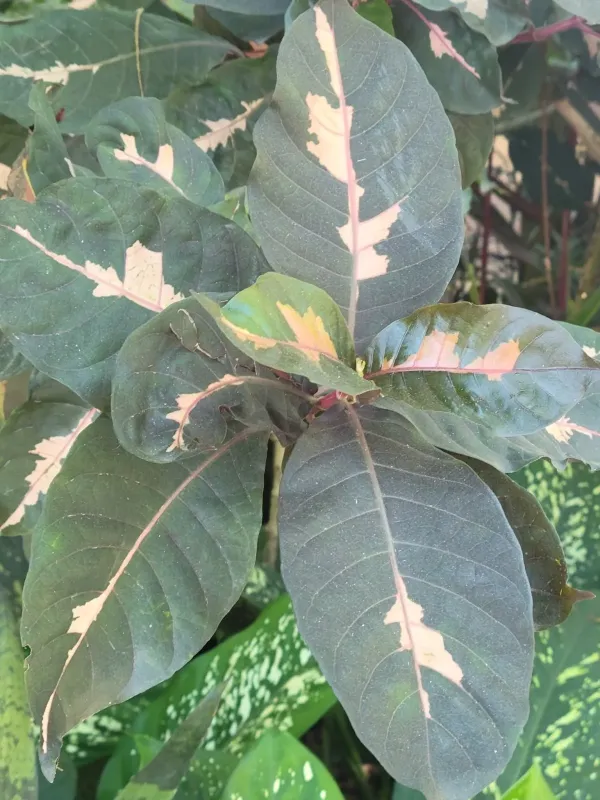
Description
Growing requirements
Graptophyllum pictum, commonly known as the caricature plant, belongs to the Acanthaceae family. It is a tropical evergreen shrub native to New Guinea and the surrounding Pacific islands, known for its distinctively variegated foliage.
The plant features glossy, ovate leaves that exhibit complex patterns of cream, yellow, or pinkish-white variegation. It is primarily utilized in horticulture as an ornamental crop for greenhouses and indoor landscapes.
Successful cultivation requires a warm environment with temperatures consistently between 20 and 28 degrees Celsius. The plant is sensitive to cold drafts and must be kept away from low-temperature zones.
A well-draining, nutrient-rich soil mix is essential for healthy growth. Incorporating peat moss or coconut coir helps retain sufficient moisture while preventing waterlogging, which is critical for root health.
Indirect bright light is the ideal lighting condition. Excessive direct sunlight can scorch the leaves, while insufficient light may cause the variegated patterns to fade, reducing the plant's ornamental value.
Main diseases and pests
Spider mites are a primary concern for Graptophyllum pictum in indoor environments. They thrive in dry conditions, making regular misting a vital part of the overall plant management strategy.
Scale insects and mealybugs frequently target the stems and leaf axils. Physical removal or the application of horticultural oils is recommended to control these infestations without damaging the foliage.
Root rot, typically caused by overwatering or poor drainage, remains the most significant threat to the plant's survival. Signs include yellowing leaves and a softening of the stem base.
Fungal leaf spot diseases can occur if water remains on the leaves for extended periods in humid, stagnant air. Improving airflow is a key preventative measure for greenhouse managers.
Integrated Pest Management (IPM) practices, including regular monitoring and the use of insecticidal soaps, are highly recommended to ensure the longevity and health of the crop.