
Gracilaria chilensis
Gracilaria chilensis
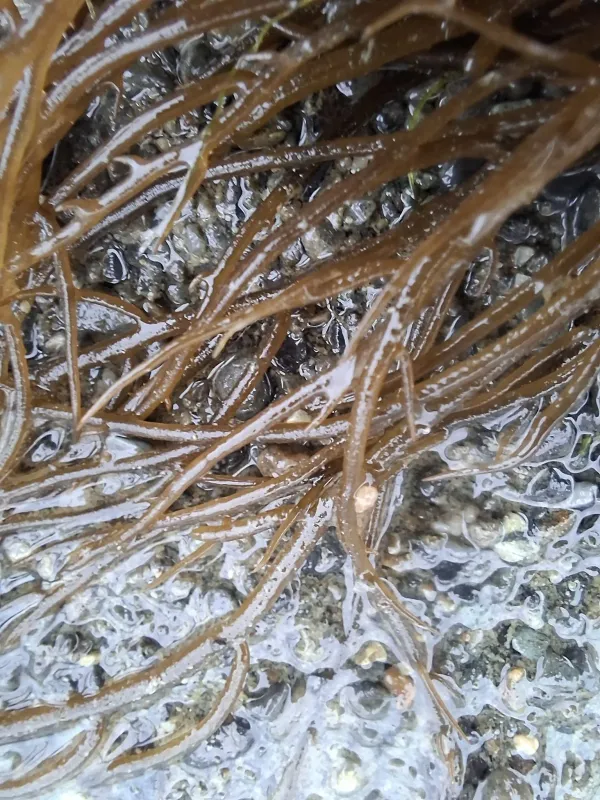
Description
Sowing dates
Gracilaria chilensis is a prominent species of red seaweed belonging to the Gracilariaceae family, widely recognized for its vital role in global agar-agar production.
Cultivation of this crop primarily involves vegetative propagation, where fragments of the mature thallus are attached to ropes, nets, or other structures suspended in the water column.
The selection of a suitable farming site is critical; it must provide optimal flow to ensure nutrient supply while being sheltered from extreme wave action that could destroy the crop.
Seedlings are typically deployed during seasons with stable water temperatures to facilitate rapid attachment and initial growth cycles before the biomass increases significantly.
Effective plantation design includes managing stocking density carefully, as overcrowding inhibits growth rates and increases the risk of oxygen depletion within the canopy.
Growing requirements
The species requires a specific range of environmental conditions, with water temperatures ideally maintained between 10 and 20 degrees Celsius for optimal metabolic activity.
Light penetration is a key limiting factor; therefore, cultivation is restricted to shallow or clear waters where photosynthesis can occur efficiently across the entire surface area of the seaweed.
Chemical parameters, including the concentration of inorganic nitrogen and phosphorus, are essential for biomass expansion and the synthesis of high-quality phycocolloids.
The species demonstrates tolerance to moderate variations in salinity, making it well-suited for estuarine environments where salinity levels are relatively stable over time.
Maintenance of the farming structures is necessary to prevent fouling by other organisms, ensuring that the crop remains healthy and free from competitive pressures.
Yield
High yields of Gracilaria chilensis are achieved by managing the nutrient influx provided by natural tidal currents, which replenish essential minerals in the growth zones.
Advanced farming systems use controlled harvesting cycles to ensure the maximum output of biomass while allowing the population to recover naturally between cuts.
Yield estimation is conducted by measuring growth rates per square meter of the cultivation grid, allowing farmers to adjust inputs or harvest timings based on real-time data.
Regular monitoring of environmental stressors ensures that the crop maintains a high agar yield, which is the primary driver of its economic value in the market.
Efficient post-harvest processing, including cleaning and drying, ensures that the final product meets the standards required for industrial gel extraction.
Main diseases and pests
The primary threats to Gracilaria plantations include the infestation of epiphytic algae, which outcompete the crop for nutrients and light, drastically reducing overall yields.
Marine pests, including various crustaceans and mollusks, can cause significant physical damage to the thalli, potentially leading to widespread plant tissue degradation.
Pathogenic outbreaks, often triggered by water pollution or sudden shifts in water chemistry, can manifest as whitening or necrotic lesions on the seaweed surface.
Extreme climate events, such as heatwaves or severe storms, pose a direct threat to the physical integrity and physiological health of the crop in its natural environment.
- Bacterial and fungal rot
- Invasive marine species competition
- Predation by gastropods and crustaceans
- Impact of environmental pollutants
Harvesting
Harvesting techniques involve either total or partial removal of the thalli, with partial harvesting often preferred to sustain a productive crop for multiple seasons.
Mechanical harvesting equipment is used in large-scale operations to increase efficiency, while small-scale farms rely on manual labor for selective harvesting.
Immediately after extraction from the sea, the seaweed is rinsed to remove sand, silt, and epiphytic debris, ensuring the purity of the raw material.
Drying is typically performed on sun-drying platforms or in climate-controlled dehydrators to reduce water content and inhibit the growth of unwanted microbes.
Proper storage is essential to maintain the quality of the dried seaweed, requiring cool, moisture-free conditions to prevent degradation of the agar-producing components.