
Golden tip
Goodia lotifolia
Description
Growing requirements
Golden tip (Goodia lotifolia) is a perennial shrub belonging to the Fabaceae family, native to Australia. It is highly regarded for its biological nitrogen-fixing capabilities, which assist in improving soil health and nitrogen content in diverse agricultural landscapes.
The plant thrives in a variety of soil types, ranging from sandy loams to rocky soils, provided they offer excellent drainage. It is commonly found in forest margins and mountainous slopes, demonstrating a remarkable ability to adapt to varying ecological conditions.
Climatically, Goodia lotifolia prefers temperate to subtropical environments. It requires significant sunlight for optimal flowering and growth, although it shows tolerance to partial shade. Protection from severe frost is essential for maintaining the health of young stands.
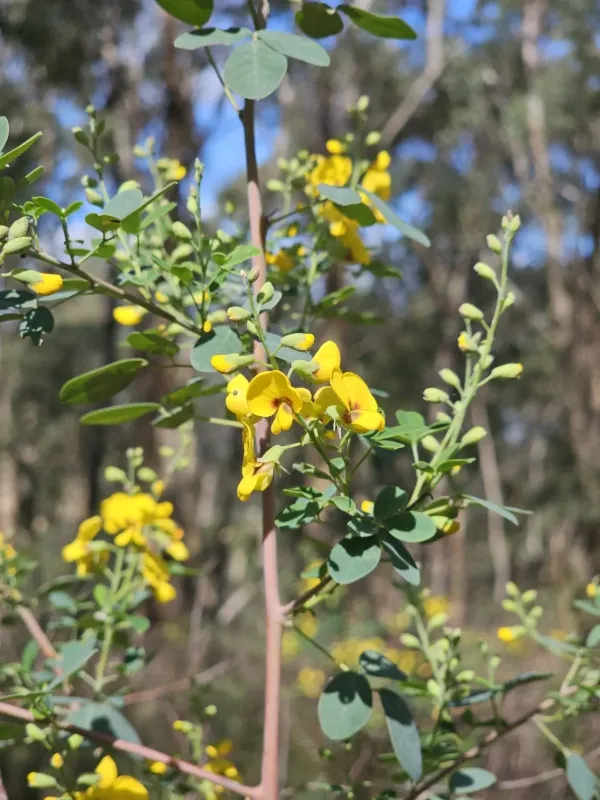
Botanically, it is characterized by its trifoliate, clover-like leaves and attractive yellow flowers featuring a red to brown center. As a legume, it forms a symbiotic relationship with rhizobia bacteria, which is the cornerstone of its role in sustainable land management.
The primary agricultural use of Golden tip is soil stabilization and land restoration. Due to its dense growth, it effectively prevents erosion on steep slopes and improves overall site biodiversity by serving as a habitat for beneficial insects and pollinators.
Main diseases and pests
The most significant threat to the health of the Golden tip is root rot caused by poor soil drainage. Waterlogging creates anaerobic conditions that favor fungal pathogens, leading to the rapid decline of the root system and eventual plant death.
Pests, particularly various leaf-eating beetles and caterpillars, can cause localized damage to foliage. In most agricultural settings, natural predation is sufficient to manage these populations without the need for intensive insecticide applications.
During the establishment phase, seedlings are vulnerable to weed competition. Effective weed control measures in the first season are critical to ensure that the shrubs can establish a dominant position and access necessary resources.
While mature plants are quite drought-tolerant, extreme and prolonged water deficiency can lead to leaf drop and reduced vigor. Supplementing irrigation during severe summer heatwaves is recommended for ensuring consistent productivity.
Monitoring for signs of nutrient deficiency is also advised, although the plant's nitrogen-fixing ability generally provides sufficient nutrition when proper soil pH levels are maintained.