
Gonium pectorale
Gonium pectorale
Description
Growing requirements
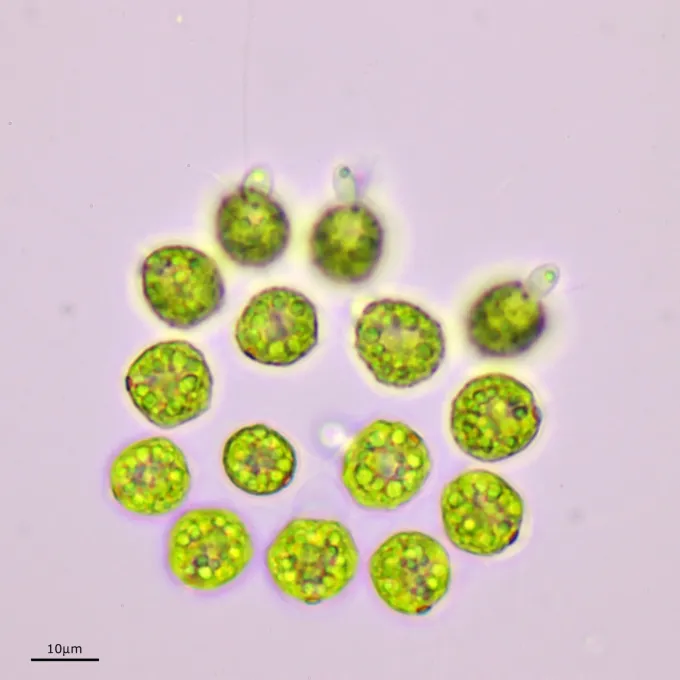
Gonium pectorale is a colonial green alga belonging to the Volvocaceae family, known for its distinct flat, plate-like colony structure typically consisting of 16 cells. Each cell possesses two flagella, which work in coordination to move the colony through the water. This organism serves as a vital model for studying the evolution of multicellularity.
In nature, this species inhabits small freshwater bodies, including ponds, ditches, and stagnant water zones. It is commonly found in temperate regions across the globe. The algae thrives in environments rich in organic nutrients, which support the rapid division of cells within the colony during favorable seasonal conditions.
Climate and environmental requirements for cultivation are stringent. The organism requires moderate temperatures, typically between 18°C and 25°C, to maintain optimal metabolic activity. High light intensity is necessary for photosynthesis, but it must be regulated to prevent damage to the cellular structure and to ensure stable colony integrity.
The growth medium must be enriched with specific mineral salts, nitrogen, and phosphorus to facilitate consistent biomass production. In controlled laboratory or industrial settings, the pH level should be maintained within a slightly alkaline range, as this mimics the natural habitat of the species and prevents the growth of competing microorganisms.
Agrotechnological methods for mass cultivation involve the use of photobioreactors. Continuous but gentle agitation is essential to ensure that all cells receive uniform exposure to light and nutrients while preventing the colony from settling on the bottom of the vessel, which would inhibit its growth and reproductive cycle.
Main diseases and pests
The primary biological threats to Gonium pectorale cultures include chytrid fungi, which act as parasites by infecting individual cells and causing the collapse of the colony. These pathogens can spread rapidly within a closed system if the culture is not kept under strictly sterile conditions.
Predatory protozoa and various rotifers are also significant pests that graze on the algal colonies. Their presence can severely reduce the population density in a short period, necessitating regular monitoring and filtration of the water medium to protect the desired culture.
Competition from other, more robust species of green and blue-green algae represents a constant challenge in non-sterile cultivation. These rivals can quickly dominate the nutrient-rich medium, outcompeting Gonium for essential resources and light, leading to the eventual decline of the target colony.
Chemical stress caused by heavy metal accumulation or fluctuating water salinity can irreversibly damage the flagellar apparatus. Without functional flagella, the colony loses its ability to orient toward light sources, which significantly impacts its photosynthetic efficiency and overall survival.
Oxidative stress, often caused by an imbalance in dissolved gas levels, poses a threat to the membrane integrity of the cells. Maintaining proper aeration protocols is crucial to prevent the accumulation of excess oxygen, which can cause damage during periods of high light intensity.