
Golden polypody
Phlebodium aureum (L.) J. Sm.
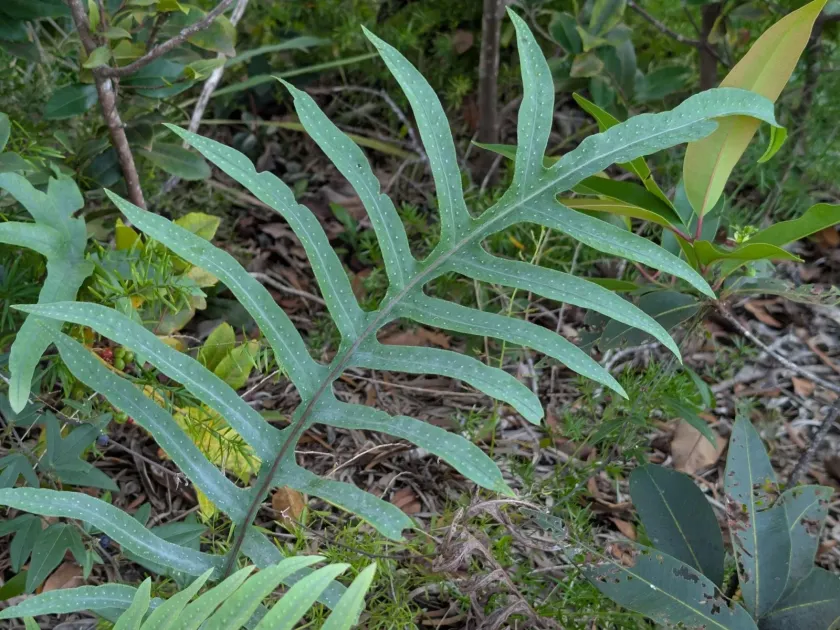
Description
Growing requirements
Phlebodium aureum is a member of the Polypodiaceae family, widely known for its distinct golden-colored scales covering its rhizomes. Native to the tropical regions of the Americas, this fern has evolved as an epiphyte, often growing on tree trunks in its natural habitat.
Optimal growth requires bright, indirect light conditions. Intense direct sun exposure can severely damage the foliage, leading to necrosis. In commercial greenhouse production, shade cloths are typically used to maintain the necessary light levels between 15,000 and 25,000 lux.
The crop demands a high-quality, well-draining substrate rich in organic matter. A mixture of peat, perlite, and pine bark is recommended to ensure the roots have access to both moisture and oxygen, preventing the common issue of root asphyxiation during the growth cycle.
Humidity management is a critical factor for productivity. The crop performs best when relative humidity stays above 65 percent. In indoor or greenhouse environments, misting systems or automated climate controllers are used to mimic the natural tropical forest environment.
The economic value of this culture is primarily found in the ornamental plant trade. Due to its unique blue-green fronds and overall hardiness, it serves as an excellent commercial indoor plant, requiring relatively low maintenance once established in a stable environment.
Main diseases and pests
Pest management primarily involves monitoring for spider mites and scale insects. These pests thrive in dry environments; therefore, maintaining high humidity serves as a natural cultural method to deter infestations before chemical intervention becomes necessary.
Pathogenic threats include soil-borne fungi such as Pythium and Rhizoctonia, which cause rhizome rot under waterlogged conditions. Proper irrigation timing and the use of well-aerated media are the primary preventative measures in modern nursery operations.