
Glyphaea brevis
Glyphaea brevis
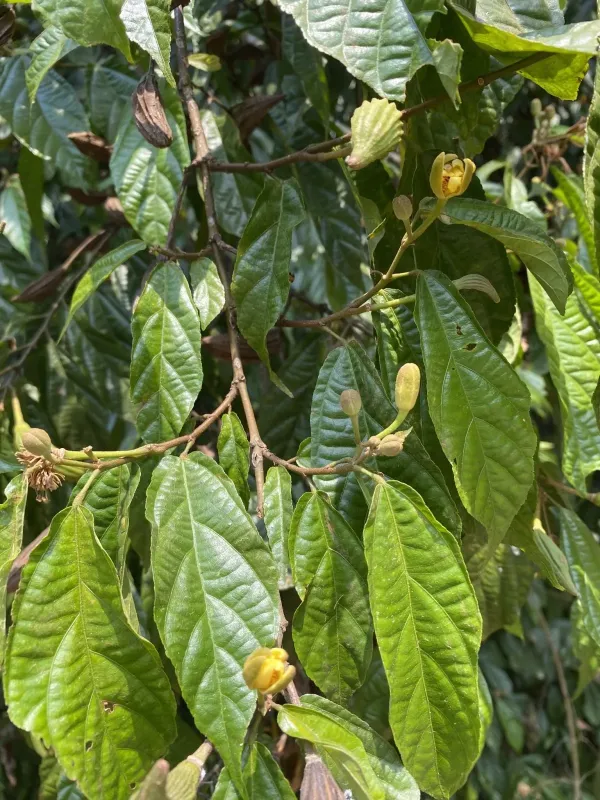
Description
Growing requirements
Glyphaea brevis is a perennial shrub belonging to the Malvaceae family. It is a significant tropical species native to the humid regions of West and Central Africa, where it plays a notable role in the local ecology and traditional agroforestry practices.
To thrive, the plant requires consistent moisture and a tropical climate with high humidity levels. It prefers deep, nutrient-rich soils that have good drainage capacity, ensuring that the roots remain healthy while receiving the necessary hydration for rapid development during the rainy season.
The botanical structure of the plant includes resilient stems that are highly valued for their fiber content. Under favorable conditions, the plant displays a rapid growth rate, making it a viable crop for biomass and fiber production in specific microclimatic regions within the tropics.
Management of this crop involves maintaining soil fertility and ensuring the plants are protected from extreme weather events. It is particularly sensitive to severe drought conditions, which can significantly reduce the quality and quantity of the fibrous yields obtained from the mature stalks.
In terms of economic application, Glyphaea brevis is primarily utilized as a source of high-quality fiber. Local farmers process the bark fibers into durable ropes and woven goods. Its importance as a sustainable natural resource continues to be recognized in studies focusing on underutilized tropical plants.