
Rough licorice
Glycyrrhiza aspera
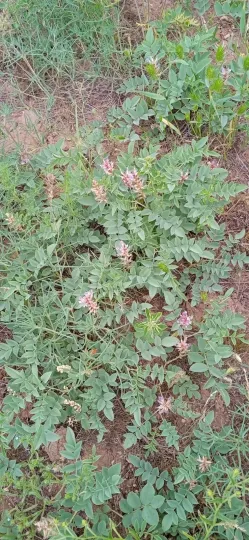
Description
Sowing dates
Rough licorice (Glycyrrhiza aspera) is a perennial member of the Fabaceae family, highly valued for its medicinal properties and chemical compounds stored in its roots.
The sowing process begins in early spring when the soil temperature consistently reaches 10-12 degrees Celsius, facilitating steady germination.
Due to the hard seed coat, pre-sowing treatments like scarification or soaking are essential to break dormancy and ensure a uniform emergence of seedlings.
Vegetative propagation using root cuttings is also a common commercial practice, as it allows for a more predictable and faster establishment of new plantations.
Seeds or cuttings should be planted at a depth of 3-4 centimeters in well-prepared, loose soil, maintaining an optimal plant spacing to avoid competition for nutrients.
Growing requirements
Rough licorice thrives in sunny locations with well-drained, sandy loam or loose loamy soils, which are ideal for the development of its extensive root system.
This crop is known for its high resilience to drought and heat, making it suitable for cultivation in semi-arid and continental climates with low rainfall.
The plant performs best in neutral to slightly alkaline soil conditions; highly acidic or heavy clay soils must be avoided as they inhibit root growth and quality.
Although it is drought-tolerant once established, irrigation during the first growing season is crucial for successful stand establishment and root development.
Adequate management of weeds is necessary during the initial stages of development, as the crop grows slowly and can be easily outcompeted by weeds.
Yield
The yield of rough licorice is measured by the total weight of dry roots per hectare, which requires 3-4 years of maturity to reach optimal harvest quality.
Industrial plantations aim for high-density planting to maximize the root mass production, often yielding several tons of dried product per hectare.
Harvest timing is critical; late autumn or early spring are the best periods, as they coincide with the highest concentration of active compounds in the roots.
Soil fertility management, including the application of phosphorus and potassium, significantly improves both the root size and the overall yield of the plant.
Post-harvest processing involves cleaning and drying, which significantly reduces the initial fresh mass, making the final dry-weight yield the primary commercial metric.
Main diseases and pests
Root rot is the most serious threat to licorice plantations, usually caused by poor drainage or prolonged periods of excessive moisture in the soil.
Pests such as the clover leaf weevil and various aphid species can infest the foliage, leading to reduced photosynthesis and overall weakened plants.
Integrated pest management, including regular crop rotation and the use of resistant varieties, is essential to minimize the need for chemical interventions.
Environmental factors like sudden temperature drops in spring can also affect young plants, although the species is generally quite hardy once established.
Continuous monitoring of the field for early signs of disease and insect damage is the most effective way to prevent widespread economic loss in the plantation.
Harvesting
Harvesting is an intensive process requiring heavy machinery, such as deep-plowing equipment, capable of digging up the roots to a depth of up to 80 centimeters.
The roots must be carefully extracted to minimize damage, as broken roots are more susceptible to rot and have a lower commercial market value.
Once harvested, roots undergo a thorough washing process to remove all soil particles and impurities, followed by immediate sorting by size and grade.
Drying is performed either under protected sheds with good airflow or in industrial dryers at low temperatures to ensure the preservation of glycyrrhizin.
Properly dried and processed roots are then stored in ventilated facilities, ready to be utilized in pharmaceutical and food industries for various extractions.