
Twining soybean
Glycine clandestina
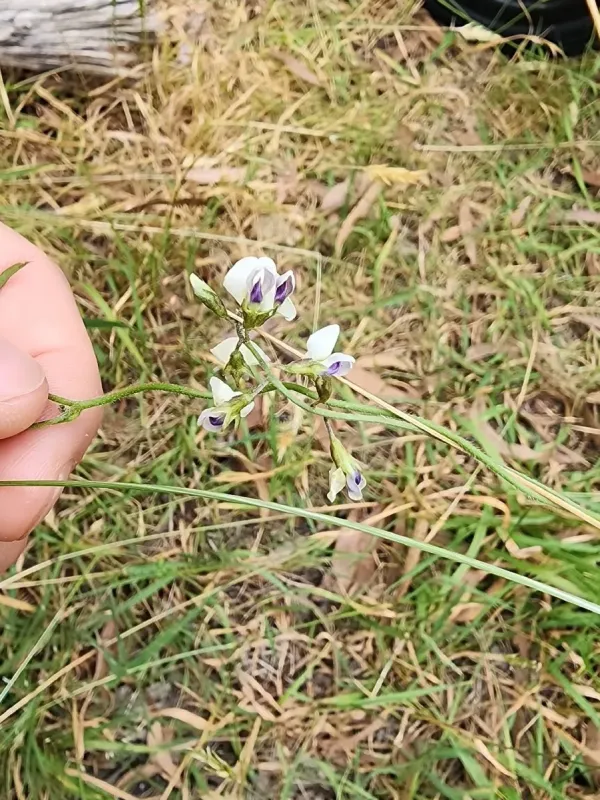
Description
Growing requirements
Twining soybean (Glycine clandestina) is a perennial herb belonging to the Fabaceae family. It is recognized as a wild relative of the domesticated soybean, serving as an important genetic reservoir for crop improvement research.
Native to Australia, this species is widespread across various habitats. It thrives in diverse environmental conditions, ranging from open woodlands to shrublands, demonstrating remarkable ecological plasticity.
The botanical structure is characterized by slender, trailing or climbing stems. It features trifoliate leaves with varying degrees of hairiness, typical for the genus Glycine, and produces small, inconspicuous flowers.
Regarding soil requirements, it prefers well-drained substrates but can tolerate nutrient-poor soils. Its ability to form nodules with soil bacteria allows it to fix atmospheric nitrogen efficiently in its native habitat.
The climate requirements include a preference for temperate to subtropical regions. While it is adapted to the Australian climate, it shows significant resilience to environmental stress, particularly periods of low moisture.
Main diseases and pests
The primary threats to this species include fungal pathogens like Rhizoctonia, which can affect root health in waterlogged conditions. Pest pressure from aphids and spider mites can also impact biomass production during hot, dry spells.