
American mannagrass
Glyceria grandis
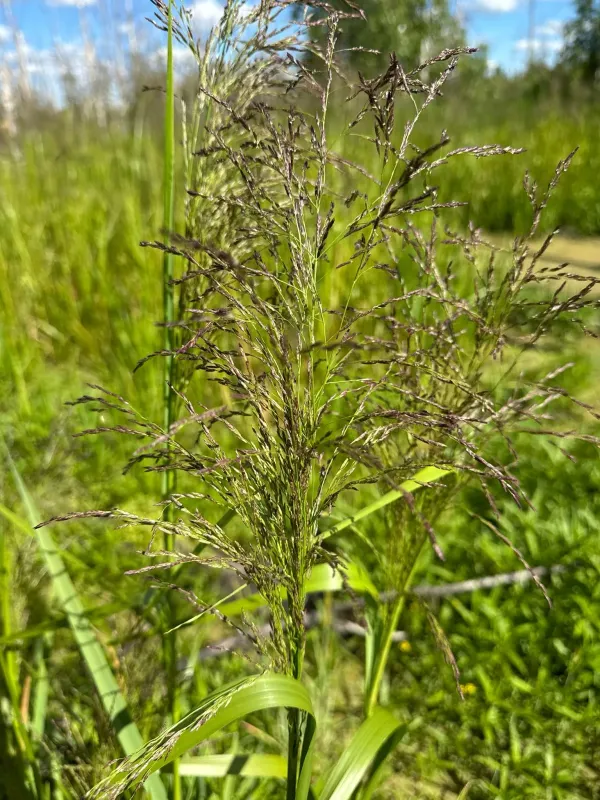
Description
Growing requirements
American mannagrass (Glyceria grandis) is a perennial grass species belonging to the Poaceae family. It is native to North America and is highly regarded for its ability to thrive in wet, riparian habitats, making it a specialized crop for challenging environmental conditions.
The plant is highly hygrophilous, meaning it requires consistently moist soil to reach its full productive potential. It performs exceptionally well in fertile, moisture-retentive soils such as loams and peats found in river bottoms, wetlands, and other areas prone to flooding.
Climatically, this grass is well-adapted to temperate zones with significant annual precipitation. It demonstrates superior tolerance to waterlogged soil conditions and can withstand periodic inundation, which often causes other standard forage grasses to succumb to root rot or lack of oxygen.
Botanically, it features robust stems reaching up to 150 cm in height and broad, lush green leaves. The root system consists of strong rhizomes, which allow the plant to spread effectively, creating a dense turf that prevents soil erosion in wet areas while providing high-quality biomass.
From an agricultural standpoint, American mannagrass is utilized primarily as a forage resource for livestock. Its ability to regrow rapidly after grazing or harvesting makes it a sustainable choice for pasture development in wetland zones that are otherwise unsuitable for traditional agriculture.
Main diseases and pests
Despite its resilience, Glyceria grandis can be susceptible to fungal diseases such as leaf rust and ergot, particularly during seasons with prolonged high humidity and stagnant air circulation within the stand.
Common pests include cereal leaf beetles and various aphid species that target the foliage. These insects can reduce the photosynthetic capacity of the plant and lead to a significant drop in forage nutritional value if infestations are not monitored.
Integrated pest management strategies are recommended, focusing on maintaining field hygiene and ensuring that the grass is harvested at the optimal time to break the pest lifecycle.
Proper drainage management, where possible, can help mitigate disease risks by reducing the amount of moisture trapped near the soil surface during warmer months.
Consultation with local agricultural extension services is advised to determine the best threshold for intervention if pest damage exceeds tolerable levels for sustainable fodder production.