
Globularia arabica
Globularia arabica Jaub. et Sp.
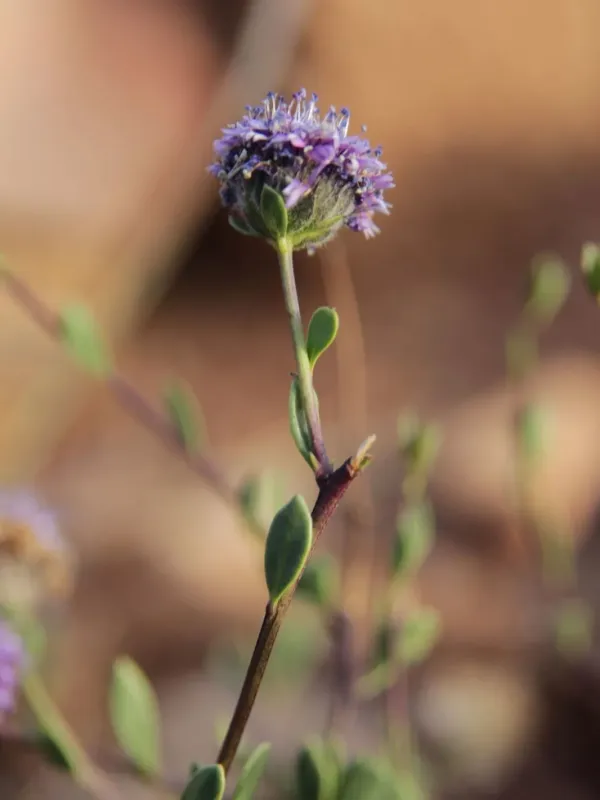
Description
Growing requirements
Globularia arabica is a resilient perennial subshrub belonging to the Plantaginaceae family. It is native to the arid environments of the Middle East and North Africa, where it thrives in rocky desert terrains and limestone slopes.
As a specialized xerophyte, the plant has evolved unique physiological mechanisms to endure prolonged drought. Its structural features, including leathery leaves and a robust root system, allow it to survive in nutrient-poor, hyper-arid substrates.
The botanical architecture of this plant is highlighted by its globose inflorescences, which possess a vibrant color ranging from blue to violet. These flowers are highly adapted for attraction of local pollinators in sparse desert ecosystems.
For successful cultivation, Globularia arabica requires extremely well-draining soil, ideally a mineral-rich rocky mix. Standard potting soils that retain moisture should be avoided as they lead to rapid plant decline.
The plant demands full sunlight exposure throughout the day. It is accustomed to high diurnal temperature fluctuations and requires excellent air circulation to maintain its healthy growth cycle.
Main diseases and pests
The most significant threat to the health of Globularia arabica is root rot, typically caused by excessive irrigation or poor drainage. This condition is often fatal and stems from the plant's inability to process stagnant water.
Pest pressures are generally low in its natural habitat, but in cultivated settings, spider mites represent a primary concern. These mites thrive in hot, dry conditions where the plant is stressed by improper environmental factors.
Aphid infestations may also occur during the flowering stage, potentially damaging the reproductive organs of the plant and reducing its overall vigor.
Effective management focuses on creating a stable environment that mimics the desert climate, emphasizing dryness and light over rich, damp soil.
- Utilize highly porous, mineral-heavy growing mediums.
- Implement a strict, infrequent watering schedule.
- Monitor closely for the signs of mites or aphids during peak heat periods.