
Hairy ground-ivy
Glechoma hirsuta
Description
Growing requirements
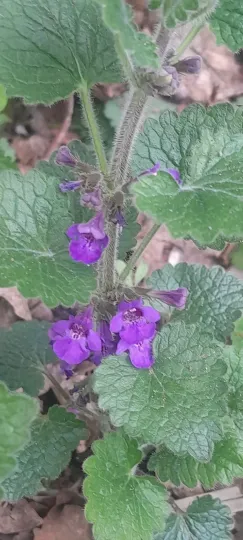
Hairy ground-ivy (Glechoma hirsuta) is a perennial herbaceous plant belonging to the Lamiaceae family. It is distinguished from the common ground-ivy by its larger leaf size, more robust growth habit, and the dense covering of fine, coarse hairs on its stems and foliage.
The native range of this species includes temperate forests and shaded scrublands throughout Central and Southeastern Europe. It prefers damp, nutrient-rich soils and is particularly well-suited to sites with partial shade, where the microclimate mimics its natural woodland habitat.
This plant is an excellent ground cover, as it propagates efficiently via creeping stolons that root at the nodes. This vegetative spreading habit allows it to form dense, mat-like colonies, making it highly effective for suppressing weed competition in managed landscapes.
Cultivation requirements include a consistent moisture regime, as the plant does not tolerate prolonged drought. While it is hardy in temperate climates, providing a layer of organic mulch can help retain soil moisture and provide the necessary nutrients for vigorous growth.
From an agricultural and commercial perspective, Glechoma hirsuta is valued for its nectar production and medicinal properties. Its early blooming period makes it a significant source of forage for bees, helping colonies rebuild their strength following the winter season.
Main diseases and pests
The primary pathological threats to hairy ground-ivy include fungal diseases such as powdery mildew, which thrives in conditions of high humidity and poor air circulation. These infections typically appear as a white dusting on the leaves, weakening the plant's vigor.
Insect pests are generally less of a problem compared to other crops due to the plant's aromatic profile. However, in exceptionally dry seasons, spider mites can become an issue, leading to chlorosis and potential dieback of the affected leaf segments.
Effective management strategies emphasize prevention, such as ensuring adequate spacing between plants to allow for airflow. Removing and destroying affected foliage early in the season can significantly reduce the pressure of fungal spores on the remaining healthy population.
When necessary, integrated pest management practices should be employed, prioritizing biological controls that align with the plant's use as a medicinal crop. Avoid excessive overhead watering, which can create a favorable environment for secondary bacterial or fungal growth.
Maintaining balanced soil fertility is crucial for plant health, as overly stressed or under-nourished plants are significantly more susceptible to infection. Regular field inspections during the spring months remain the best method for detecting and managing potential threats early.