
Gladiolus carinatus
Gladiolus carinatus
Description
Growing requirements
Gladiolus carinatus, commonly known as the keeled gladiolus, belongs to the Iridaceae family. It is a perennial herbaceous plant that grows from a corm, displaying a distinct morphology adapted to the seasonal climates of the Southern African region.
The native distribution of this species is centered in the Cape region, where it naturally thrives in well-drained sandy substrates. These environments are characterized by winter rainfall and hot, dry summers, which determine the plant's biological cycle and dormancy period.
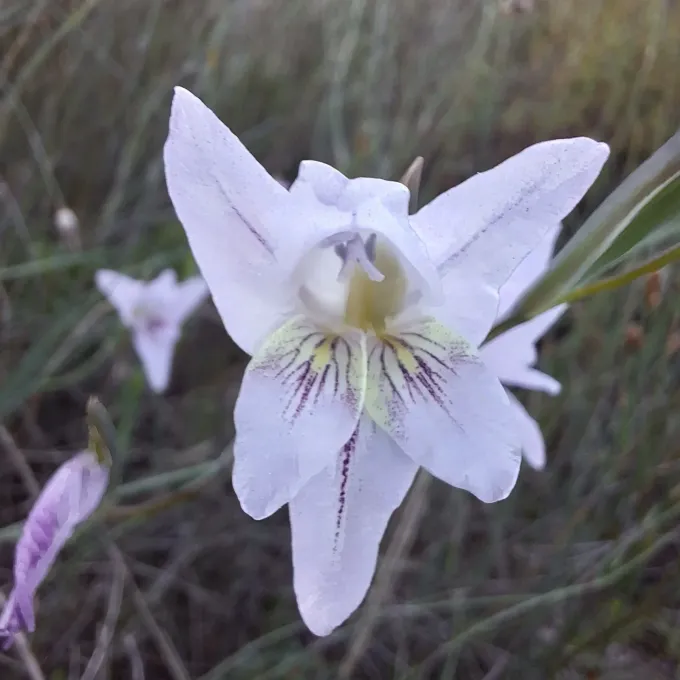
Botanically, Gladiolus carinatus is noted for its slender, sword-shaped leaves and inflorescences featuring flowers with a distinct keel-like structure. The color palette typically ranges from deep blue to violet tones, making it an attractive specimen for specialized botanical collections.
Regarding cultivation requirements, the plant demands full sun exposure. Adequate light is essential for the metabolic processes that support the development of a healthy replacement corm, which ensures the plant's survival and vigor for the following growth cycle.
Soil structure is critical for this species. It requires excellent drainage to prevent root rot and other physiological issues related to moisture stagnation. The optimal soil pH for successful development is slightly acidic to neutral, mimicking its natural habitat conditions.
Main diseases and pests
The primary threats to Gladiolus carinatus include fungal infections such as Fusarium wilt and Botrytis, which can rapidly affect corm health if soil moisture levels remain too high or if the planting site lacks proper air circulation.
In terms of insect pests, thrips represent the most significant challenge. These tiny insects feed on the plant tissues, often causing silvering of the leaves and deformity in the flowers, which significantly reduces the ornamental value of the crop.
Integrated pest management strategies are highly recommended for this species. This includes careful inspection of corms before planting, followed by the application of systemic fungicides to protect the developing plant from dormant soil pathogens.
To control pest populations, regular monitoring of the foliage is essential. In cases of infestation, chemical treatments with appropriate systemic insecticides should be applied according to local agricultural guidelines to minimize plant damage.
Cultural practices such as crop rotation and the removal of plant debris help prevent the accumulation of pathogens in the soil, ensuring that Gladiolus carinatus maintains optimal health throughout the growing season.