
Gilbertiodendron dewevrei
Gilbertiodendron dewevrei
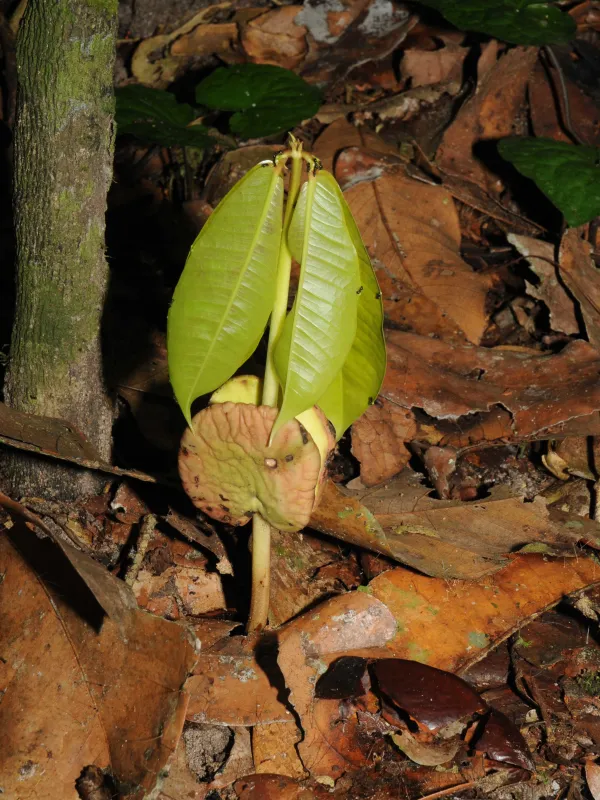
Description
Growing requirements
Gilbertiodendron dewevrei is a prominent evergreen tree belonging to the Fabaceae family, native to the tropical rainforests of Central Africa, particularly the Congo Basin.
The tree thrives in equatorial climates characterized by high annual rainfall and consistent warm temperatures, typically ranging from 22 to 30 degrees Celsius throughout the year.
Regarding soil requirements, it prefers deep, well-drained, and nutrient-rich substrates. It is particularly well-adapted to the clay-rich soils found within its native distribution range.
This species is highly shade-tolerant during its juvenile phase, allowing it to regenerate successfully in the understory of dense primary forests before reaching the canopy.
Proper environmental management is essential, as the species relies on high levels of humidity and stable microclimatic conditions to maintain its vigorous growth rate.
Yield
The economic value of this tree is primarily derived from its high-quality, dense timber, which is sought after for construction, flooring, and fine cabinetry work.
With an ability to reach heights of up to 45 meters, the tree represents a substantial biomass source, playing a critical role in carbon sequestration within the ecosystem.
Beyond timber, the seeds of Gilbertiodendron dewevrei serve as a traditional food source for local communities, following specific processing methods to ensure edibility.
Sustainable harvesting techniques, including rotational logging and protection of young saplings, are crucial to ensure that the yield remains viable over long cycles.
The tree's capacity to form monodominant stands allows for structured forest management, provided that the ecological balance of the forest floor is maintained.
Main diseases and pests
Habitat loss due to large-scale deforestation and conversion of land for industrial agriculture remains the most significant threat to the survival of this species.
Insect pests, including various wood-boring beetles, can damage the health of the trees, especially if the forest ecosystem is stressed by environmental changes.
Fungal infections are a constant concern in humid environments, particularly when trees are wounded by improper harvesting techniques or natural environmental hazards.
Competition from fast-growing invasive plant species can hinder the development of seedlings, preventing them from accessing necessary light and soil nutrients.
Extended drought periods, driven by global climate change, pose a direct threat to the survival of young trees, which require high water availability to establish themselves.