
Geoffroea striata
Geoffroea striata
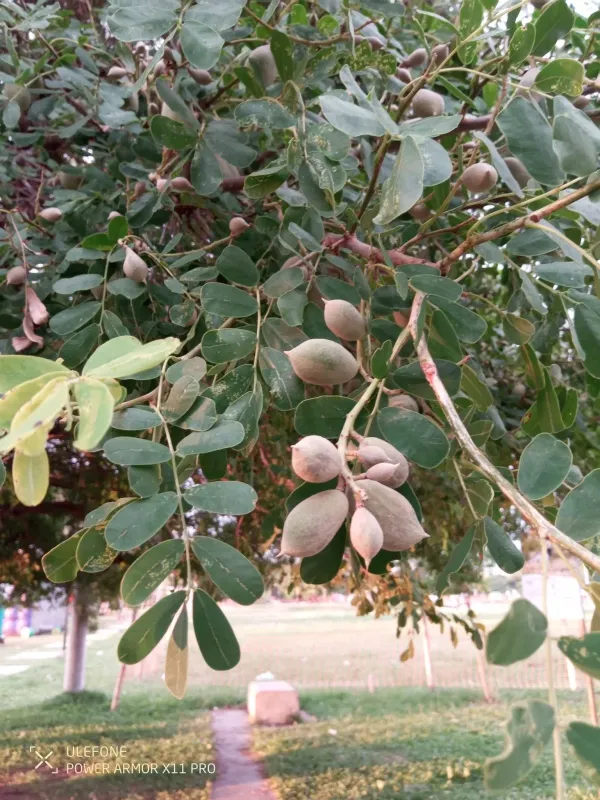
Description
Sowing dates
Propagation of this culture in natural conditions occurs primarily through seeds. Sowing seeds in nurseries or prepared plots requires stratification to increase germination rates, as the hard seed coat can hinder emergence.
The optimal time for planting seedlings in the soil is considered to be the beginning of the rainy season. This ensures that young plants have sufficient moisture reserves to adapt their root systems to the new soil environment.
When cultivating on an industrial scale, it is crucial to maintain proper spacing between trees. A planting scheme that accounts for the future canopy width is recommended to avoid competition for light and nutrients.
Site preparation involves deep soil tillage and the application of organic fertilizers before planting. Young trees require regular weed control in the root zone during the first few years of growth.
In regions with a distinct dry season, a drip irrigation system should be provided. This minimizes stress for young seedlings during the initial months following transplanting.
Growing requirements
Geoffroea striata belongs to the legume family and is a tree characteristic of the arid and semi-arid regions of South America. It is well adapted to high-temperature regimes.
The crop prefers well-drained sandy or sandy-loam soils. It demonstrates high tolerance to substrate salinity, making it a promising candidate for the reclamation of degraded lands.
The plant's photophilous nature is a critical growth factor. Under shading, the canopy becomes sparse, and vegetative mass productivity decreases significantly, negatively impacting forage value.
The tree is capable of withstanding long periods of drought due to its developed taproot system. However, moderate moisture during the growing season is necessary for active growth and the formation of high-quality fruits.
In agronomic practice, the culture is valued for its nitrogen-fixing properties typical of legumes. The root system interacts symbiotically with nodule bacteria, enriching the soil with organic nitrogen.
Yield
The economic use of the species focuses on obtaining nutritious fruits and green mass. Yield depends on the tree's age and growing conditions, reaching a peak during the active fruiting stage.
The fruits are drupe-like structures with a fleshy pericarp, highly valued as a source of livestock feed. During dry periods, they become a critical resource for local farmers.
Green mass is used as an additional source of protein in the diet of ruminants. The leaves contain significant amounts of protein, allowing for the partial substitution of expensive concentrated feeds.
With proper maintenance and pruning, regular fruiting can be achieved. Effective orchard management allows for stable biomass production in regions where other agricultural crops are not profitable.
The wood of the plant is noted for its high density and strength, which allows the use of old trees in carpentry. This adds economic value to the culture beyond its importance as forage.
Main diseases and pests
Specific diseases of the culture have not been sufficiently studied, but like all legumes, the plant may be susceptible to fungal infections if moisture regimes are disrupted. Excessive watering leads to root rot.
Pests that affect legume crops may also pose a threat to this species. The most dangerous are leaf-eating insects and specific types of weevils that damage seeds inside the fruits.
Young seedlings can be damaged by small rodents or wild herbivores. It is recommended to install protective fencing until the tree reaches an age where the bark becomes sufficiently thick and tough.
Mold development on fruits is possible under high-humidity conditions during harvest. Timely drying of fruits before storage prevents the loss of market quality.
To prevent the spread of infections, agronomists recommend the sanitary pruning of affected branches. The disposal of plant debris should be conducted away from the plantation to reduce the infection background.
Harvesting
Fruit harvesting is primarily done manually as they reach maturity. It is important to avoid over-ripening on the tree, as this attracts pests and contributes to crop loss through fruit drop.
For green mass harvesting, mechanized pruning of branches is applied. This allows for combining feed collection with formative canopy pruning, stimulating the growth of new foliage for the following season.
The optimal harvest time is determined by changes in fruit color and consistency. During collection, it is important to minimize damage to branches, as wound sites can become entry points for infection.
Fruit storage requires a dry and well-ventilated area. The use of airtight containers is not recommended to avoid moisture condensation and the development of microflora.
After harvesting, work is conducted to clean the root zones of fallen fruits. This helps reduce the population of pests that may use plant debris as wintering sites.