
Geoffroea decorticans
Geoffroea decorticans
Description
Growing requirements
Geoffroea decorticans, commonly referred to as chañar, belongs to the Fabaceae family and is native to the arid regions of South America. It is a highly specialized tree species adapted to survival in harsh, low-moisture environments.
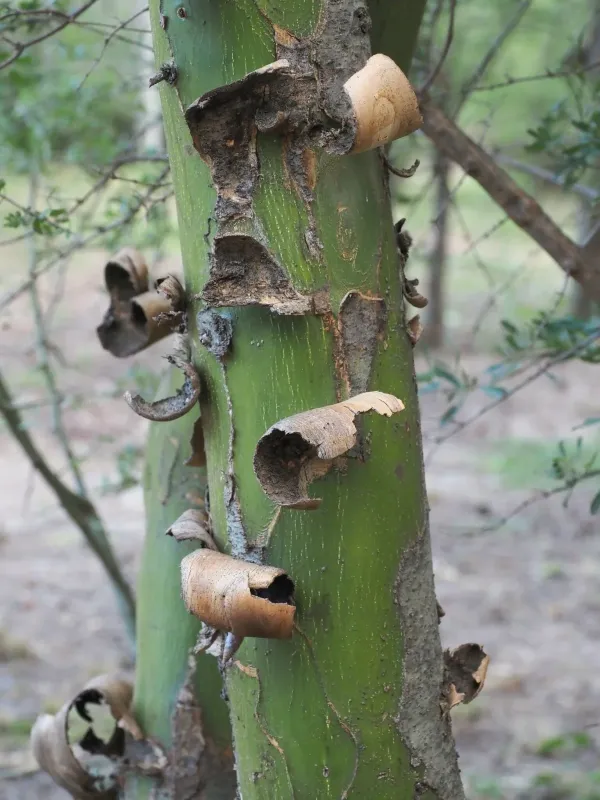
The botanical structure of the plant features deciduous bark, which peels off in patches, and small, thorny branches. These traits facilitate drought resistance, allowing the tree to maintain metabolic processes even when rainfall is severely limited for extended periods.
To cultivate this species, site selection is crucial; it requires deep, well-draining soil and exposure to full sun. It exhibits significant tolerance for alkaline and saline soils, making it an excellent candidate for ecological restoration of degraded dryland agricultural zones.
Agricultural management involves careful watering during the establishment phase, usually the first two years of growth, to ensure the root system penetrates deep enough to access groundwater tables in later stages of development.
The tree is valued for its nutrient-rich, sweet fruit pods, which are used to produce syrups, flours, and traditional beverages. Additionally, the wood is dense and durable, often utilized in artisanal furniture making and fence post construction.
Main diseases and pests
The primary threat to the health of Geoffroea decorticans is soil saturation. When drainage is poor, the roots become prone to fungal pathogens, such as root rot, which can quickly destabilize the tree's vascular system and lead to decline.
Pest management is often focused on controlling coleopteran insects that feed on the seeds and young vegetative tissue. Without active observation during the fruit-set period, larval infestations can significantly deplete the potential harvest.
Bark-boring beetles can also pose a serious risk, especially to older, stressed individuals. If the tree's health is compromised, these borers can penetrate the trunk and introduce secondary bacterial pathogens that weaken the structural integrity of the wood.
Maintaining proper tree spacing is a vital preventative measure. Overcrowded plantations increase humidity levels around the foliage, creating a favorable microclimate for the development of fungal spores and other opportunistic microbes.
Integrated pest management strategies are recommended, focusing on maintaining biodiversity in the orchard to encourage natural predators, which helps control pest populations without heavy reliance on synthetic pesticides.