
Fringed gentian
Gentianopsis detonsa
Description
Growing requirements
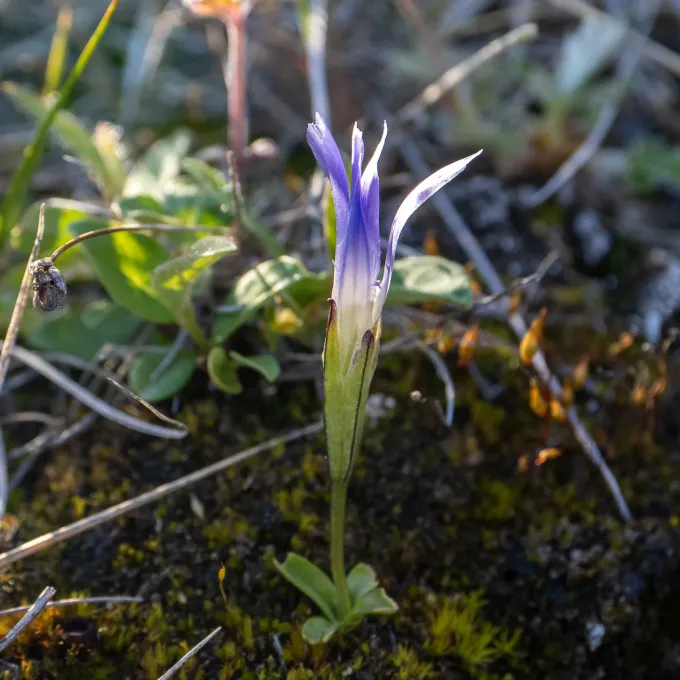
The fringed gentian (Gentianopsis detonsa) is a notable member of the Gentianaceae family. It is an annual or biennial herbaceous plant distinguished by its delicate, fringed petals and brilliant blue-violet flower color.
The plant originates from the cooler regions of the Northern Hemisphere, including subarctic and temperate zones. It is commonly found in moist meadows, near stream banks, and in open, calcareous wetlands where moisture levels remain consistent throughout the season.
Regarding soil requirements, this species favors carbonate-rich, neutral to slightly alkaline substrates. High moisture retention is essential, but the soil must also be well-draining to prevent root asphyxiation, as the plant cannot tolerate waterlogged conditions for long periods.
The fringed gentian thrives in cool, humid climates. It is highly sensitive to heat stress and prolonged drought. For successful growth, the plant requires a steady supply of moisture and sufficient daylight, as it does not compete well in deeply shaded environments.
Botanically, the species is characterized by simple, opposite leaves and a single terminal flower on each stalk. The characteristic fringed edges of the corolla lobes are a specialized feature that aids in the identification of this unique plant within its genus.
Main diseases and pests
Habitat loss is the primary threat to the stability of fringed gentian populations. Drainage of wetlands, urban expansion, and intensive agricultural land use significantly reduce the availability of suitable growing sites.
Fungal pathogens often attack the plant during periods of high humidity and poor air circulation. These diseases typically manifest as leaf spots or stem blights, which can rapidly diminish the health of an entire cluster of plants.
Pests such as aphids may feed on the tender shoots during the vegetative growth phase. While rarely fatal in small numbers, heavy infestations can weaken the plant and reduce its ability to produce viable seeds for the following year.
Succession in meadow ecosystems poses a major competitive challenge. If sites are not occasionally cleared or maintained, more aggressive, fast-growing grasses and shrubs will quickly overshadow the gentians, eventually forcing them out of the niche.
Conservation and management practices focus on preserving the hydrological integrity of meadow environments. Protecting these areas from fragmentation is critical for ensuring the long-term survival of the fringed gentian in its natural habitat.