
Genipa americana
Genipa americana L.
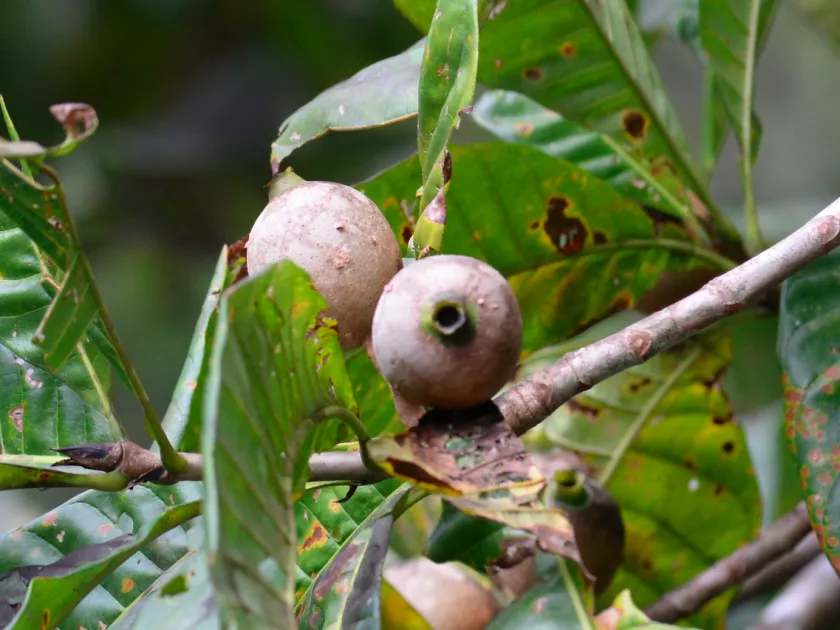
Description
Sowing dates
Genipa americana is primarily propagated through seeds. Due to their relatively short viability, seeds should be sown immediately after removal from the fruit to ensure maximum germination rates.
The seeds require a well-draining, nutrient-rich soil mix. A constant temperature range of 25–30 degrees Celsius is necessary to achieve uniform seedling emergence within a few weeks.
Young plants are sensitive to direct sunlight and must be raised in a shaded nursery environment. Regular moisture is crucial during the early stages of development to prevent root desiccation.
Transplanting to the permanent location should be timed with the onset of the rainy season to allow the root system to establish itself before the dry period begins.
Successful establishment depends on careful handling of the root ball and providing adequate support for the sapling until it develops a sturdy trunk.
Growing requirements
As a member of the Rubiaceae family, Genipa americana is native to the tropical forests of Central and South America. It is naturally adapted to alluvial soils and regions with high precipitation levels.
The crop thrives in hot, humid climates and is extremely sensitive to frost. Temperatures below 10 degrees Celsius can cause severe physiological damage or death to the plant.
While it prefers fertile, moist soil, the plant is notable for its ability to tolerate temporary waterlogging, which is a rare trait among many fruit-bearing trees.
Optimal growth occurs in areas with full to partial sun exposure. Providing shelter from strong winds is essential to prevent mechanical damage to the branches and foliage.
- High humidity levels (above 70%)
- Deep, well-draining alluvial soil
- Slightly acidic to neutral pH balance
Yield
Genipa americana trees start producing fruit around their 6th to 8th year. Once mature, a single tree can yield a significant harvest, often between 50 to 100 kilograms of fruit annually.
Yields are highly dependent on the tree's health and the presence of pollinators in the vicinity. Proper pruning to open the canopy increases sunlight penetration, leading to better fruit set.
Fertilization with balanced NPK formulas, specifically during the pre-flowering stage, is recommended to support heavy fruit loads and improve the quality of the harvest.
The fruit does not ripen all at once, necessitating periodic harvesting over several weeks. This requires organized labor management to ensure no fruit is lost to decay.
With increasing market interest in its antioxidant properties and natural dyes, modern agronomic practices are focusing on standardizing cultivation methods to stabilize annual yields.
Main diseases and pests
Fungal diseases such as leaf spot are common in humid, stagnant environments. Ensuring proper spacing between trees and regular crown thinning is vital to improve airflow and reduce humidity around the leaves.
Pests, particularly scale insects and fruit flies, represent a major threat to production. Integrated pest management (IPM) strategies, including biological controls, are preferred over broad-spectrum pesticides.
Root rot caused by soil-borne pathogens can be devastating if drainage is poor. Careful monitoring of the water table and irrigation volumes is essential for preventing these issues.
Young trees are susceptible to herbivory by small mammals and pests. Protective barriers around the base of the trunk are often necessary during the first three years of growth.
Early detection of infections is key to preventing widespread loss in a plantation setting, necessitating regular scouting during the wet season.
Harvesting
Harvesting is usually done by hand once the fruit reaches maturity, identified by a change in skin texture and color. Because the fruit is delicate, it must be handled carefully to avoid bruising.
The fruit is highly valued for the substance genipin, which turns deep blue upon oxidation. This has historically been used for body painting and textile dyeing among indigenous cultures.
In the food industry, the fruit is processed into beverages, jams, and fermented drinks. Because it has a limited shelf life when fresh, immediate post-harvest processing is recommended.
Cold storage at temperatures around 12 degrees Celsius can slightly extend the freshness of the fruit, making it more viable for local market distribution.
Effective post-harvest management involves cleaning, grading by size, and packing in ventilated containers to prevent moisture accumulation and rot during transport.