
Gaussia princeps
Gaussia princeps
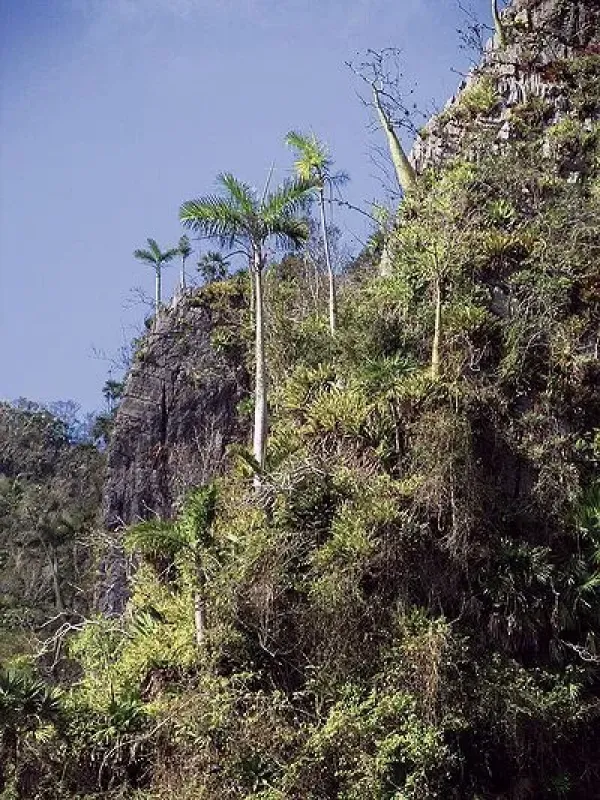
Description
Sowing dates
Propagation of Gaussia princeps is primarily achieved through seeds. It is essential to use fresh seeds as viability decreases significantly over a short period.
The sowing substrate should be light, well-draining, and composed of materials like peat moss and perlite to maintain an optimal moisture balance without waterlogging.
Seedlings require a warm environment with temperatures between 25°C and 28°C for successful germination. High ambient humidity is crucial during this phase.
Containers must be kept in a bright location but shielded from direct, harsh sunlight. Patience is required as the germination process can be slow and irregular.
Once seedlings develop their first true leaves, they should be carefully transplanted into individual pots, ensuring that the delicate roots are not damaged.
Growing requirements
Gaussia princeps belongs to the Arecaceae family and is native to the rocky, limestone-rich landscapes of western Cuba, where it thrives in specialized niches.
This species requires bright, indirect light to maintain vigorous growth. It is highly intolerant of waterlogged soil, making excellent drainage a top priority.
The soil mix should be slightly alkaline, mimicking the limestone environment of its natural habitat. Avoid using heavy, clay-based soils that retain too much water.
Temperature management is critical; the palm thrives in tropical warmth (20–30°C) and will suffer immediate damage if exposed to freezing temperatures.
Regular fertilization with a balanced, micronutrient-rich fertilizer during the growing season is necessary to support the health of its feathery foliage.
Yield
Gaussia princeps is highly valued as an ornamental specimen in tropical landscaping, botanical gardens, and specialized private palm collections.
Its distinctive bottle-shaped trunk provides a unique aesthetic, making it a focal point in xeriscaping or rock garden designs in suitable climates.
While not a traditional agricultural crop in terms of yield, its biological success depends on reaching its characteristic height and trunk girth over many years.
The cultural value of this palm lies in its ability to adapt to limestone substrates, which are often challenging for other tropical species to colonize.
Collectors view mature, well-formed specimens as high-value assets, reflecting the significant time and precise care required to cultivate this slow-growing plant.
Main diseases and pests
Root rot is the most common threat to this palm, usually resulting from over-watering or an improper drainage system in the planting pot.
In indoor or greenhouse settings, spider mites and mealybugs can pose serious problems, especially if air circulation is poor and humidity levels are low.
Fungal leaf spots may occur if water is trapped on the foliage for extended periods, necessitating improved ventilation and appropriate fungicidal treatment.
Nutrient deficiencies, particularly magnesium or iron, can cause yellowing of the leaves, which weakens the plant and makes it more susceptible to pests.
Maintaining a regular monitoring program for both the leaves and the base of the trunk is the best defensive strategy for long-term health.