
Gastrodia elata
Gastrodia elata Blume
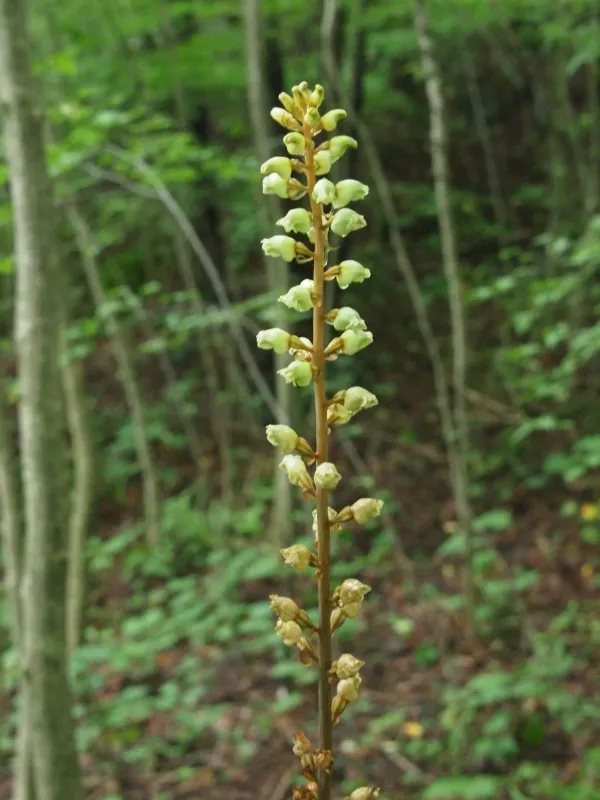
Description
Sowing dates
Gastrodia elata is a remarkable member of the Orchidaceae family that lacks chlorophyll and relies entirely on a mycorrhizal relationship with Armillaria fungi for its nutrition.
Agricultural cultivation begins with the preparation of a medium containing woody debris, which must be inoculated with specific strains of the Armillaria fungus prior to planting.
Seeds or small tuber offsets are introduced into the colonized substrate, marking the beginning of a multi-year growth cycle that requires careful management.
The timing of planting is generally aligned with the growing season, ensuring that the mycelium of the host fungus is vigorous enough to support the germinating orchid.
Success in sowing relies on maintaining the delicate balance of the symbiotic triad: the substrate, the fungus, and the Gastrodia tuber itself.
Growing requirements
This crop requires a specialized environment that mimics the humid, shaded conditions of a mountain forest, with rich organic matter and wood-based substrates.
Temperature control is essential, as the symbiotic fungus has a narrow range of tolerance, and excessive heat or frost can damage the living connection.
Moisture levels must be kept consistently high but well-drained, as waterlogged conditions can lead to the decay of both the plant tubers and the host mycelium.
The substrate acidity should be carefully monitored to match the ideal conditions for the host fungus, typically preferring slightly acidic to neutral forest soil.
Light levels should be kept low, as the plant is a heterotroph and does not require photosynthesis, but rather benefits from the protection against desiccation provided by dense forest cover.
Yield
The yield of Gastrodia elata is measured by the biomass of the tubers harvested at the end of the cultivation cycle, which can last up to three years.
Productivity is directly linked to the density and health of the fungal network; a robust host fungus ensures faster and larger tuber development.
High-quality yields are characterized by uniform tuber size and a high concentration of bioactive compounds, particularly gastrodin, which is the primary medicinal target.
Strategic management of the substrate nutrient content can help improve the overall return, though the primary driver remains the efficiency of the fungus-plant nutrient transfer.
Optimizing planting density and ensuring constant symbiotic activity are the primary agronomic levers used to increase the yield per square meter.
Main diseases and pests
The most significant threats to Gastrodia cultivation include competitive fungi and soil-borne pathogens that can overwhelm the essential Armillaria host.
Insects and rodents that inhabit the forest litter can cause significant mechanical damage to the tubers, which in turn provides entry points for secondary bacterial infections.
Environmental fluctuations, particularly prolonged drought or sudden heatwaves, can stress the host fungus and cause a collapse of the symbiotic support system.
Strict sanitary practices when preparing the substrate are required to minimize the presence of harmful microorganisms that could compete with the target fungus.
Monitoring for signs of root rot or mycelial decay is a continuous task, necessitating early detection to prevent widespread loss across the planting area.
Harvesting
Harvesting typically occurs in the late autumn after the stems have withered, signaling that the plant has entered dormancy and concentrated its nutrients in the tubers.
Careful extraction is required to avoid bruising the tubers, as mechanical damage can significantly reduce their market value and shelf life.
Once harvested, the tubers undergo a meticulous process of cleaning and grading to ensure that only the highest quality specimens reach the processing stage.
Post-harvest treatment involves controlled drying, which is critical to stabilize the bioactive compounds and prevent degradation before storage or sale.
Properly processed Gastrodia tubers are highly valued in pharmaceutical industries for their therapeutic properties, serving as a staple in traditional medicine systems.