
Garcinia gummi-gutta
Garcinia gummi-gutta
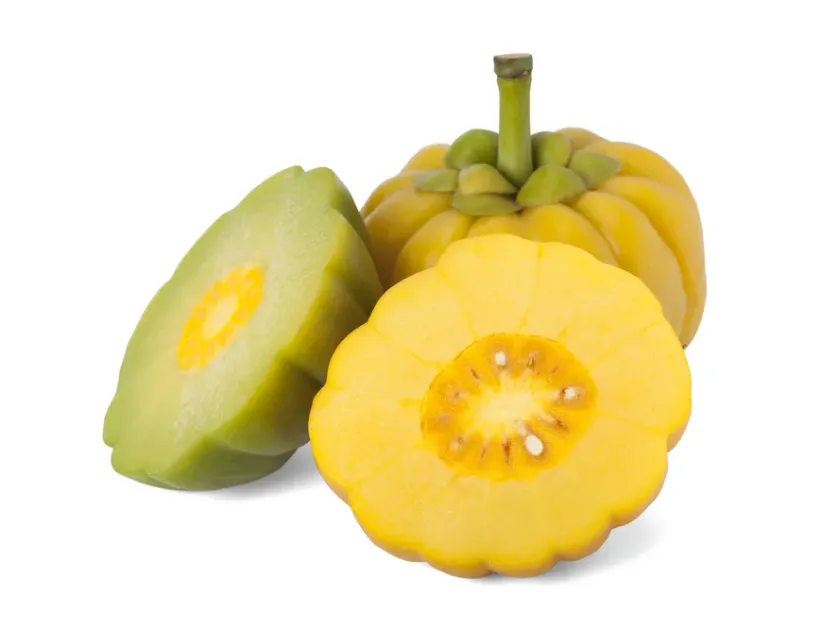
Description
Growing requirements
Garcinia gummi-gutta, commonly known as Malabar tamarind, is an evergreen tree species belonging to the Clusiaceae family. It is native to the tropical regions of Southeast Asia, particularly India, Sri Lanka, and Indonesia, where it thrives in high-humidity forests.
The crop requires a strictly tropical climate to prosper, with an ideal temperature range of 20 to 35 degrees Celsius. It is highly sensitive to cold weather and cannot tolerate frost, which makes it suitable only for regions with consistently warm weather conditions.
For optimal growth, the tree prefers deep, well-draining soils with high organic matter content. It thrives in soils with a pH ranging from slightly acidic to neutral. Providing consistent moisture is essential, especially for younger trees, to ensure steady development.
The tree exhibits a pyramidal growth pattern and can grow up to 20 meters tall in the wild. In agricultural settings, pruning is a standard practice to keep the tree at a manageable height, which facilitates easier harvesting and improves airflow within the canopy.
Economically, this crop is highly valued for the rind of its fruit, which contains high concentrations of hydroxycitric acid. This compound is utilized globally in the pharmaceutical industry and as a dietary supplement for weight management.
Main diseases and pests
While relatively robust, Garcinia gummi-gutta is susceptible to various fungal pathogens when cultivated in excessively wet environments. Anthracnose, characterized by spots on leaves and fruit, is the most common fungal issue.
Root rot represents another significant threat, typically occurring in waterlogged soils with poor drainage. Careful management of irrigation systems and soil permeability is vital to prevent these severe fungal infections.
Insect pests, including aphids and various scale insects, often target tender shoots, sap-filled leaves, and blossoms. These pests can significantly stunt plant growth if left uncontrolled during the early developmental stages.
Management strategies involve regular canopy pruning to promote better ventilation, which significantly reduces humidity around the fruits and leaves. This is the most effective preventative measure against fungal outbreaks.
Integrated pest management, including the use of biological control agents and localized application of organic insecticides, is recommended. Keeping the plantation area clean from debris also helps reduce the overwintering sites for harmful insects.
Harvesting
Harvesting of Garcinia gummi-gutta begins when the fruits change from a green color to a vibrant yellow or orange, indicating physiological maturity. Each fruit is typically picked by hand to preserve the integrity of the rind.
The harvest period is generally extended because the fruits on the tree mature asynchronously. Growers must visit the plantation multiple times throughout the season to collect fruits as they reach the peak of maturity.
Once harvested, the fruits are processed by removing the seeds and cutting the rinds into smaller segments. These segments are then spread out to dry in the sun, ensuring the product is properly dehydrated for storage.
The dried rind is the final commercial product. It turns dark brown during the drying process and becomes extremely shelf-stable, allowing for long-term storage and export without the need for sophisticated preservation methods.
The overall yield and quality of the fruit are heavily influenced by proper irrigation and nutrient management during the fruiting phase. Applying balanced fertilizers ensures that the tree has the energy required to support heavy fruit sets.