
Funtumia elastica
Funtumia elastica (P. Preuss) Stapf
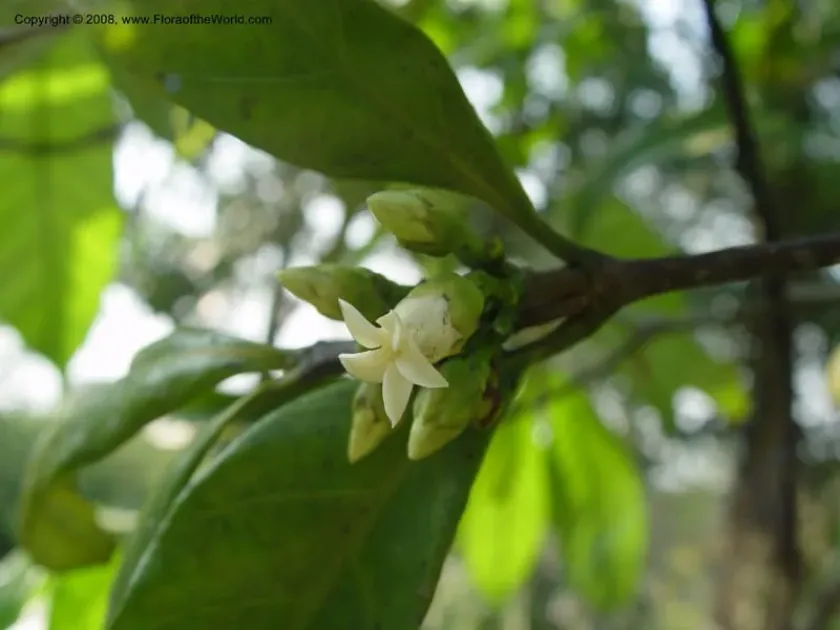
Description
Sowing dates
Sowing Funtumia elastica is primarily performed using seeds, which require careful preparation to ensure uniform germination. The optimal time for establishing nursery beds is at the onset of the rainy season, allowing seedlings to establish roots before the dry period.
Seeds are sown in prepared beds or containers with nutrient-rich substrate while maintaining consistent moisture levels. Once seedlings reach a height of 30–50 cm, they are transplanted to their permanent location with sufficient spacing for proper canopy development.
In industrial settings, creating forest plantations or agroforestry systems is preferred. Funtumia adapts well to mixed cropping conditions, which allows for efficient land use in tropical regions.
Although vegetative propagation is possible, the seed-based method remains dominant due to the ease of gathering propagation material. It is crucial to monitor seed quality, as they quickly lose viability if stored incorrectly.
During the early years of cultivation, the primary agricultural task is protecting young plants from competing vegetation. Once the canopies close, the maintenance requirements for the plantation decrease significantly.
Growing requirements
Funtumia elastica belongs to the Apocynaceae family and is native to moist tropical forests. The culture requires high temperatures and prefers stable thermal conditions without extreme fluctuations throughout the year.
For successful growth, an annual rainfall of at least 1500–2000 mm is required. The plant does not tolerate prolonged droughts well, meaning that in regions with a distinct dry season, irrigation systems are necessary to maintain soil moisture.
Preferred soils include deep, well-drained, and fertile types with a neutral or slightly acidic pH. The crop does not tolerate waterlogging, so areas with heavy clay soils may require additional drainage improvements.
Lighting plays a critical role in trunk formation; in dense plantations, trees grow taller, which is beneficial for the quality of future latex production. While adult trees thrive in direct sunlight, young seedlings may require shading during the first few months.
The native range of this species covers Central and Western Africa. Cultivation is carried out both within natural forest stands and on specialized plantations designed for technical raw material extraction.
Yield
The primary product of Funtumia is natural rubber, obtained from the latex harvested from the tree's bark. Productivity depends on the age of the tree, agricultural management, and the intensity of tapping operations.
Initial latex harvesting can begin once the tree reaches a sufficient trunk diameter, typically 6–8 years after planting. The tapping technique is similar to that of other rubber trees, requiring careful handling to protect the cambium.
Latex yields per hectare vary based on planting density and the genetic potential of the local varieties. With proper bark recovery management, trees can remain productive for many years.
In addition to latex, Funtumia provides high-quality timber used in woodworking and construction. The wood is lightweight, moderately hard, and easy to process, which enhances the overall economic value of the plantation.
Funtumia seeds may also find limited industrial or local uses. Overall, the economic viability of the culture is driven by the multifaceted utilization of the plant's biomass in tropical agricultural systems.
Main diseases and pests
The greatest threat to Funtumia plantations involves fungal diseases that thrive in high humidity and poor ventilation. These pathogens can damage leaves and trunks, leading to weakened trees and reduced latex production.
Among pests, various wood-boring insects and leaf-eating larvae pose significant risks. Regular monitoring of the plantation is essential for early detection and containment of localized infestations.
Competition from invasive weeds and aggressive vines significantly slows the growth of young trees. Regular sanitary clearing of the plantation is required to ensure healthy airflow and reduce disease pressure.
Physiological damage is often caused by improperly executed tapping. Deep cuts that penetrate the cambium can lead to necrosis and permanent scarring, reducing the tree's regenerative capacity and overall lifespan.
Preventative measures include maintaining optimal planting density and performing regular pruning. Healthy, vigorous trees possess a strong natural immune system capable of resisting most common pathogens found in tropical environments.
Harvesting
Latex harvesting is performed through a tapping method where precise incisions are made in the tree bark. It is crucial for workers to avoid damaging the inner tissues to ensure the tree can recover effectively.
The best time for tapping is during the early morning hours, when latex flow is most active. The latex is collected in specialized containers placed under the tapping points and then transported for processing.
After coagulation, the raw rubber is cleaned of impurities and dried. The quality of the final product depends on the purity and speed of the harvest, necessitating rigorous hygiene training for plantation staff.
Timber harvesting is conducted through selective logging as trees reach maturity. This approach allows for the gradual renewal of the plantation, replacing old or low-yielding trees with new seedlings to ensure a continuous production cycle.
The harvest schedule is closely linked to the tree's vegetation cycles. Strategic planning allows for maximum latex output without exhausting the trees, thereby ensuring their longevity throughout the operational period.