
Honey bell bush
Freylinia lanceolata
Description
Growing requirements
The Honey bell bush (Freylinia lanceolata) is an evergreen shrub or small tree belonging to the Scrophulariaceae family. Native to the riparian zones of South Africa, this plant is well-known for its graceful appearance and its rapid growth rate in favorable environments.
This species thrives in sunny to partially shaded locations, requiring consistent light to ensure dense foliage and successful blooming. Being native to warmer climates, it is somewhat frost-sensitive. In colder regions, growers should treat it as a conservatory or patio plant, providing winter shelter to avoid frost damage to its tender branches.
Regarding soil requirements, it prefers fertile, well-draining loamy soils that can retain adequate moisture. While it is adaptable to various soil types, the primary concern is to avoid heavy waterlogging, which can compromise root health. Consistent watering is crucial during the plant's active growing season to support its vigorous development.
Agrotechnical care primarily involves pruning. Freylinia lanceolata responds exceptionally well to shaping, making it ideal for hedge management or as a topiary specimen. By pruning regularly after the main flowering period, gardeners can promote a bushier, more compact growth habit and prepare the plant for the following season.
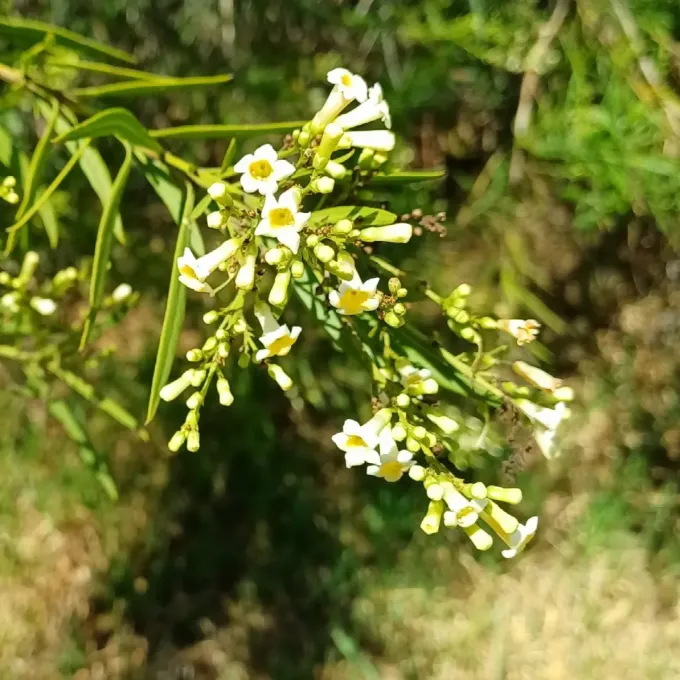
In landscaping, the Honey bell bush is prized for its tubular, yellow to orange-yellow flowers that appear in large clusters. These flowers are highly fragrant, offering a sweet honey-like scent that makes the plant an excellent choice for sensory gardens and pollinator-friendly landscapes, attracting bees and various butterfly species.
Main diseases and pests
Common pests that may affect this plant include spider mites and mealybugs, which are particularly prevalent in low-humidity environments or indoor conditions. Routine inspection of the undersides of the leaves is recommended, along with washing the foliage to deter mite infestation and maintain overall plant hygiene.
Diseases are generally associated with improper cultural practices, specifically poor drainage leading to root rot. To maintain a healthy specimen, it is essential to ensure that the potting mix or garden soil is not overly compacted and that watering is moderated during cooler, slower growth periods.