
Monument plant
Frasera speciosa
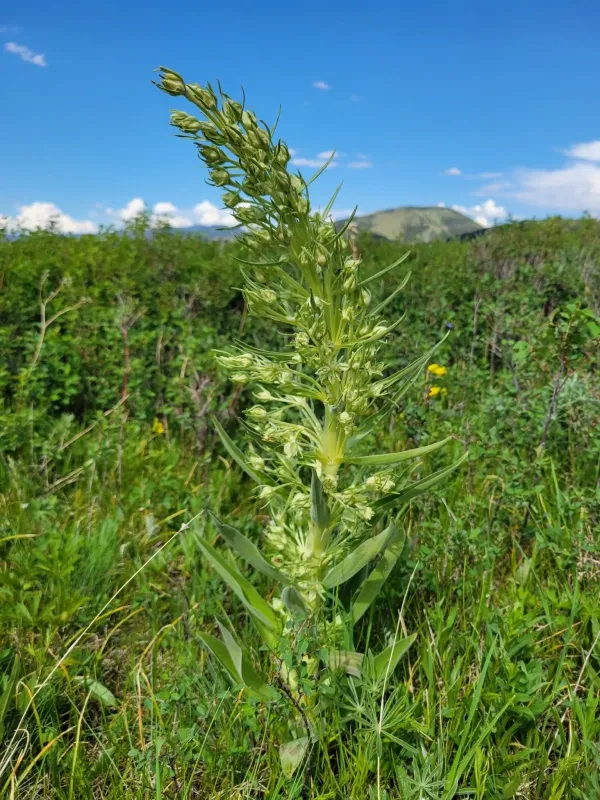
Description
Sowing dates
The Monument plant (Frasera speciosa) is primarily propagated by seeds, as it is a monocarpic perennial that completes its life cycle and dies after blooming. Seeds require a period of cold stratification to break dormancy, reflecting their natural alpine mountain environment.
The optimal time for sowing is early spring when soil temperatures begin to rise but remain sufficiently moist. Seeds should be sown in a light, well-draining substrate amended with sand or grit to prevent seedling damping-off during the initial germination phase.
Germination and early growth are remarkably slow, with the plant spending its first few years as a low-growing basal rosette of leaves. Agronomists must account for this extended vegetative period before the plant eventually shifts its energy into a massive flowering stalk.
To enhance germination rates, researchers often use specific growth stimulants or mimic fluctuating thermal regimes. Seed depth should be kept to a minimum, as the seeds require sufficient light exposure to initiate proper metabolic development.
Due to the plant's sensitivity to overcrowding, spacing is a critical factor. Wide spacing reduces competition for nutrients and ensures adequate airflow around the basal leaves, significantly lowering the potential for fungal disease outbreaks in the plot.
Growing requirements
Belonging to the Gentianaceae family, the Monument plant is native to the western regions of North America. Its natural habitat includes subalpine meadows and open, rocky slopes characterized by well-drained, often calcareous, or alkaline soils.
Frasera speciosa thrives in high-light conditions, demanding full sun exposure for optimal growth and structural integrity. While it can tolerate partial shade, insufficient light often results in elongated, weak stems that are prone to lodging.
Climatic requirements are defined by its alpine origin, which necessitates high winter hardiness and tolerance to dramatic temperature fluctuations. It is well-adapted to continental climates but requires protection from excessive winter moisture, which can easily rot the root crown.
The soil structure must facilitate the development of a deep taproot, which is essential for the plant's survival in its natural environment. In agricultural settings, heavy or compacted soils should be amended with coarse gravel to ensure root zone aeration.
Irrigation should be managed carefully, ensuring consistent moisture during the active growing season without saturating the soil. Fertilizer application should be conservative, as excessive nitrogen often leads to excessive leaf growth at the expense of root stability.
Harvesting
The harvest of Frasera speciosa is primarily focused on seed collection for propagation or restoration projects. Since the plant is a monocarp, the harvesting process is the final step in the plant's life, occurring once the flower stalk has matured and seeds have reached viability.
The seeds are lightweight and easily dispersed by wind, necessitating careful harvesting before the capsules split open. Harvested flower stalks should be hung in dry, well-ventilated areas away from direct sunlight to allow for further curing and drying.
In ornamental and landscape uses, the spectacular flower stalk is often left in place for its visual impact throughout the season. Harvesting is only performed after the stalk has naturally yellowed and the seeds have fully hardened within the capsules.
Breeding and selection efforts focus on stalk height, flower density, and resistance to environmental stressors. Seed quality is assessed through standard laboratory germination tests to ensure the material remains viable for future planting cycles.
Post-harvest sanitation is vital to maintain field health. All residual stalks and basal foliage should be cleared from the site once seed collection is complete to mitigate the risk of harboring overwintering pests or fungal pathogens in the soil.