
Franklinia alatamaha
Franklinia alatamaha
Description
Growing requirements
Franklinia alatamaha, commonly known as the Franklin tree, is an exquisite deciduous tree or large shrub belonging to the tea family (Theaceae). Historically native to the banks of the Altamaha River in Georgia, it is now considered extinct in the wild and exists only in cultivation.
This species requires specific soil conditions to thrive. It necessitates acidic, moist, and well-draining soil rich in organic matter. Gardeners must avoid planting it in compacted or heavy clay soils that retain water, as the roots are highly susceptible to rot if oxygen levels drop.
Climate adaptability is a significant factor for success. The Franklin tree prefers temperate regions where it is protected from extreme drying winds. It performs best in locations with full sun to partial shade, depending on the intensity of the local summer heat.
General maintenance involves consistent irrigation during dry spells, as the plant does not tolerate drought. Applying organic mulch is essential to maintain soil moisture and keep the root zone cool, mimicking the natural conditions of a woodland forest edge.
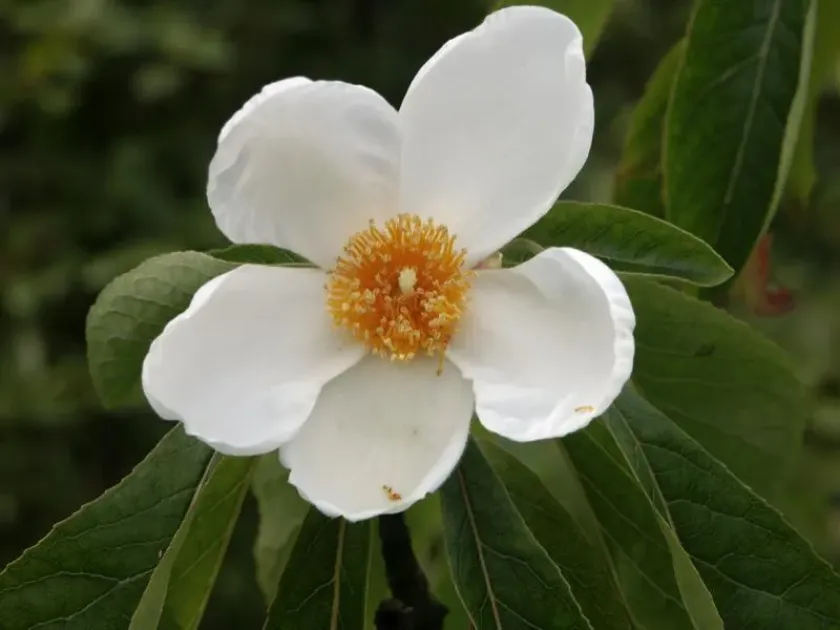
The primary use of Franklinia is ornamental. It is highly valued for its large, fragrant, white, camellia-like blossoms with striking yellow stamens. Its foliage turns a brilliant orange-red in the autumn, making it a spectacular focal point for specimen planting in gardens.
Main diseases and pests
The most serious threat to Franklinia alatamaha is root rot caused by Phytophthora fungi. This disease is directly linked to poor drainage and overwatering. Proper site selection and careful monitoring of soil moisture are the most effective preventative measures against such pathogens.
While the tree is relatively resistant to major pests, it may occasionally be affected by aphids or spider mites, particularly when the tree is stressed by improper environmental conditions. Keeping the tree vigorous through correct pruning and balanced fertilizing helps it naturally resist these minor infestations.